I Mowed My 82-Year-Old Neighbor's Yard While Pregnant, And The Next Morning The Sheriff Knocked With A Letter That Changed My Life
I cut Mrs. Harlan's grass because I could not watch her fight that mower another minute.
That was all.
No plan.
No noble speech.
No secret hope that kindness would come back wearing a badge.
It was ninety-six degrees, my ankles were swollen, and I was thirty-four weeks pregnant with a foreclosure notice sitting on my kitchen table like a second heartbeat.
I had stepped outside because the house felt too small for my fear.
Then I saw my neighbor trying to push an old rusted mower through grass nearly to her knees.
Mrs. Harlan was eighty-two.
Tiny.
Stubborn.
Wearing a straw hat with one side bent down.
She told me to leave her alone.
I took the mower anyway.
The next morning, the sheriff knocked on my door.
I Thought Trouble Had Finally Found Me
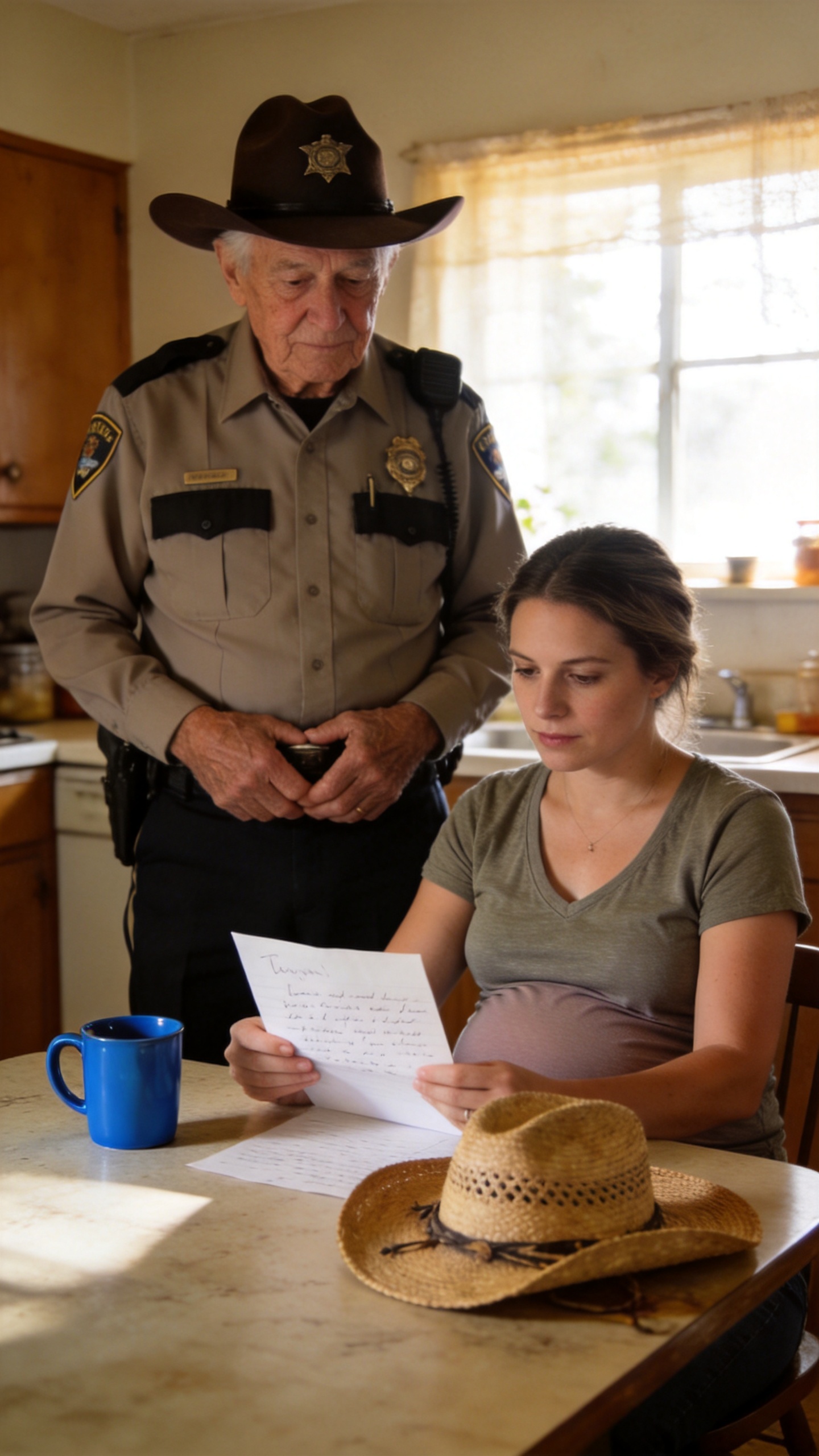
Sheriff Boone stood on my porch with his hat in both hands.
That frightened me more than if he had kept it on.
Men do not remove hats for good news in towns like ours.
"Ms. Parker," he said, "Mrs. Harlan asked that I bring you next door before anyone else arrives."
My hand went to my stomach.
"What happened?"
His face softened.
"She passed in her sleep."
I sat down on the porch step because my knees forgot their job.
The day before, she had sat in the shade with a glass of lemonade and scolded me for doing the edges wrong.
Then she laughed.
Then she said, "At least now it won't look like I gave up."
Those were the last words I heard from her.
Sheriff Boone waited until I could stand.
Then he added, "There is a letter with your name on it."
The inside of Mrs. Harlan's house was still in a way houses become only when the person who made them breathe is gone. Her cardigan hung on a chair. A crossword sat unfinished on the kitchen table. The air smelled like lemon soap and old wood.
An envelope lay beside a blue coffee mug.
My name was written in shaky ink.
Abby.
I opened it with both hands.
She Had Been Watching More Than Her Yard
The letter was not sentimental.
That would have made it easier to dismiss as grief.
It was clear.
Mrs. Harlan wrote that she had no children, no close relatives she trusted, and no patience left for people who showed up only when a body was gone and property remained.
She wrote that kindness is not small just because it happens without witnesses.
Then she wrote the line that made me read the page three times:
The deed papers are in the desk. Boone knows what to do.
I looked at the sheriff.
"This cannot mean what I think it means."
He pulled out a chair.
"Sit down."
Six months earlier, Mrs. Harlan had met with an estate attorney. Her health was worse than she told anyone. She had arranged a transfer structure naming me as beneficiary of the house, the remaining equity, and a small savings account meant to cover taxes during transition.
Not because I mowed once.
Because she had been watching.
The storm shutters I closed when wind warnings came.
The grocery bags I carried without making a production of it.
The nights I sat on her porch during thunderstorms because she hated admitting she was scared.
The time I fixed her mailbox with duct tape and a prayer.
She had also seen me.
Pregnant.
Working late.
Avoiding calls from the bank.
Pretending not to cry while taking trash out.
I pressed the letter to my chest and sobbed so hard the baby kicked.