"Take Off That Fake Uniform," The Airport Agent Said As I Escorted A Fallen Soldier Home. She Ripped Up My Military Orders And Had Me Detained, Until One Call From The Pentagon Turned The Entire Terminal Against Her
"Take off that fake uniform before you embarrass real soldiers."
The gate agent said it loudly enough for the whole waiting area to hear.
Gate C17 went quiet in stages.
First the woman with the stroller stopped bouncing her baby.
Then the college kid near the charging station lowered one earbud.
Then three passengers in first-class boarding lane looked at my dress blues, looked at my face, and decided curiosity was safer than respect.
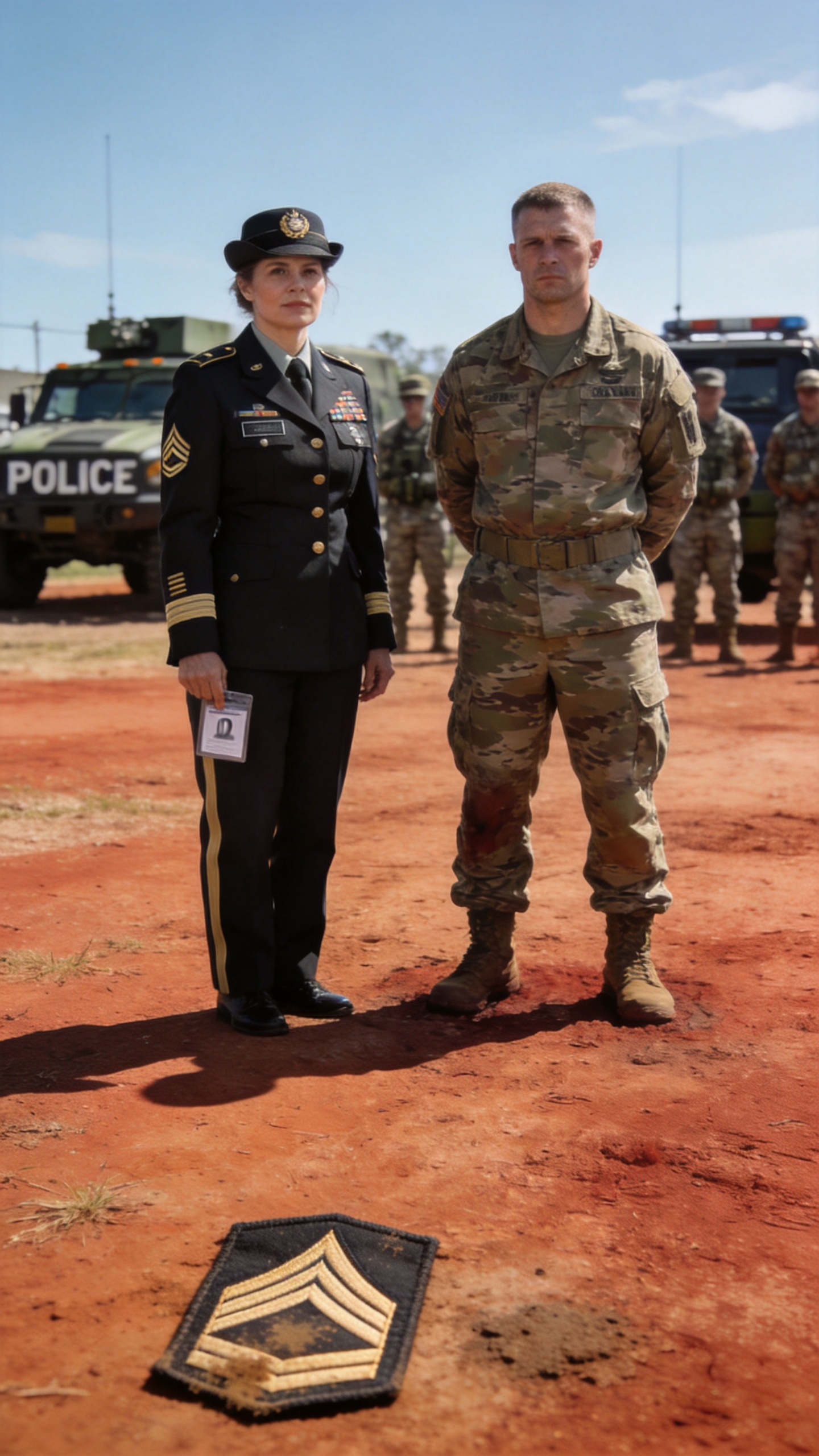
My name is Colonel Marcus Ellison.
Thirty-one years in the United States Army.
Two deployments in Iraq.
One in Afghanistan.
More memorial services than my heart has ever learned how to survive.
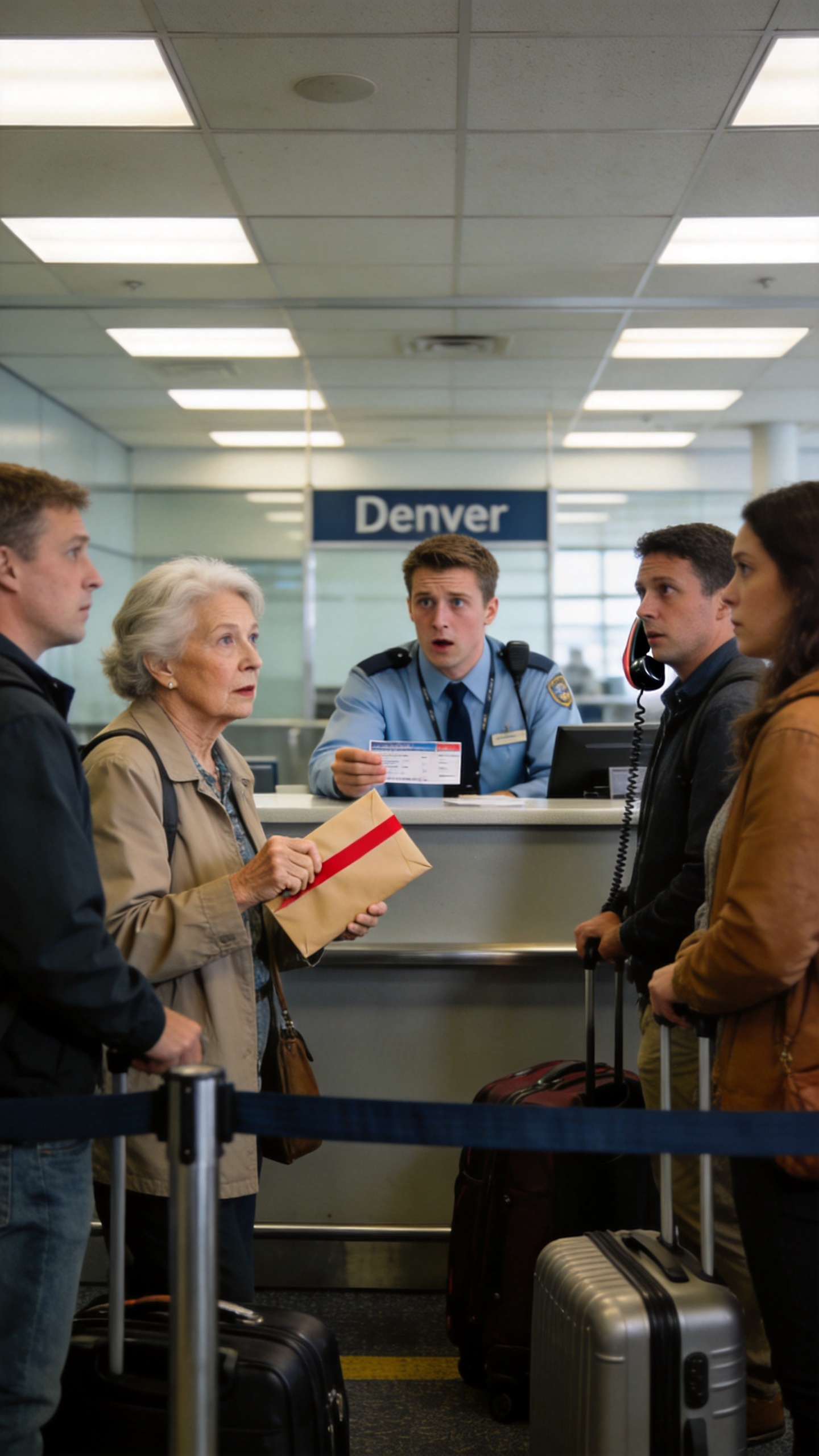
That afternoon, none of it mattered to the woman behind the airline counter.
Her name tag read Denise Carver.
Her nails were glossy red. Her scarf was tied with corporate precision. Her eyes moved from my dark skin to the ribbons on my chest and stopped there with open contempt.
"Ma'am," I said, keeping my voice level, "I am the official military escort for Sergeant Owen Whitaker. His remains are being loaded onto Flight 2861. These are Department of Defense travel orders."
I slid my ID, escort packet, and sealed authorization across the counter.
Denise barely touched them.
"I know what real orders look like," she said.
She did not.
The packet had been signed that morning by the Deputy Chief of Staff after a storm rerouted the original escort team. Sergeant Whitaker was nineteen years old. He was going home to Cedar Falls, Ohio, where his mother had already placed a folded flag case on the mantel because the funeral director told her it would help to have somewhere to put it.
I had promised the casualty office I would not let that boy fly alone.
Denise picked up the packet.
For one second, I thought she might read it.
Instead, she bent the first page down the center and tore the corner clean through the embossed seal.
A sound moved through the passengers.
Not outrage.
Shock.
The kind people make when they witness something wrong but have not decided whether it is their responsibility.
My hand landed flat on the counter.
"Pick that up."
Denise flinched, then recovered.
"Security," she barked into the desk phone. "I have an aggressive impersonator at C17 refusing to leave the gate."
Through the glass behind her, the jet bridge had already begun to pull away.
On the tarmac, beneath the gray afternoon light, the aircraft carrying Sergeant Whitaker's flag-draped transfer case was preparing to push back.
My throat tightened.
"Do not close that door," I said.
Denise smiled.
Not a nervous smile.
A satisfied one.
"Too late."
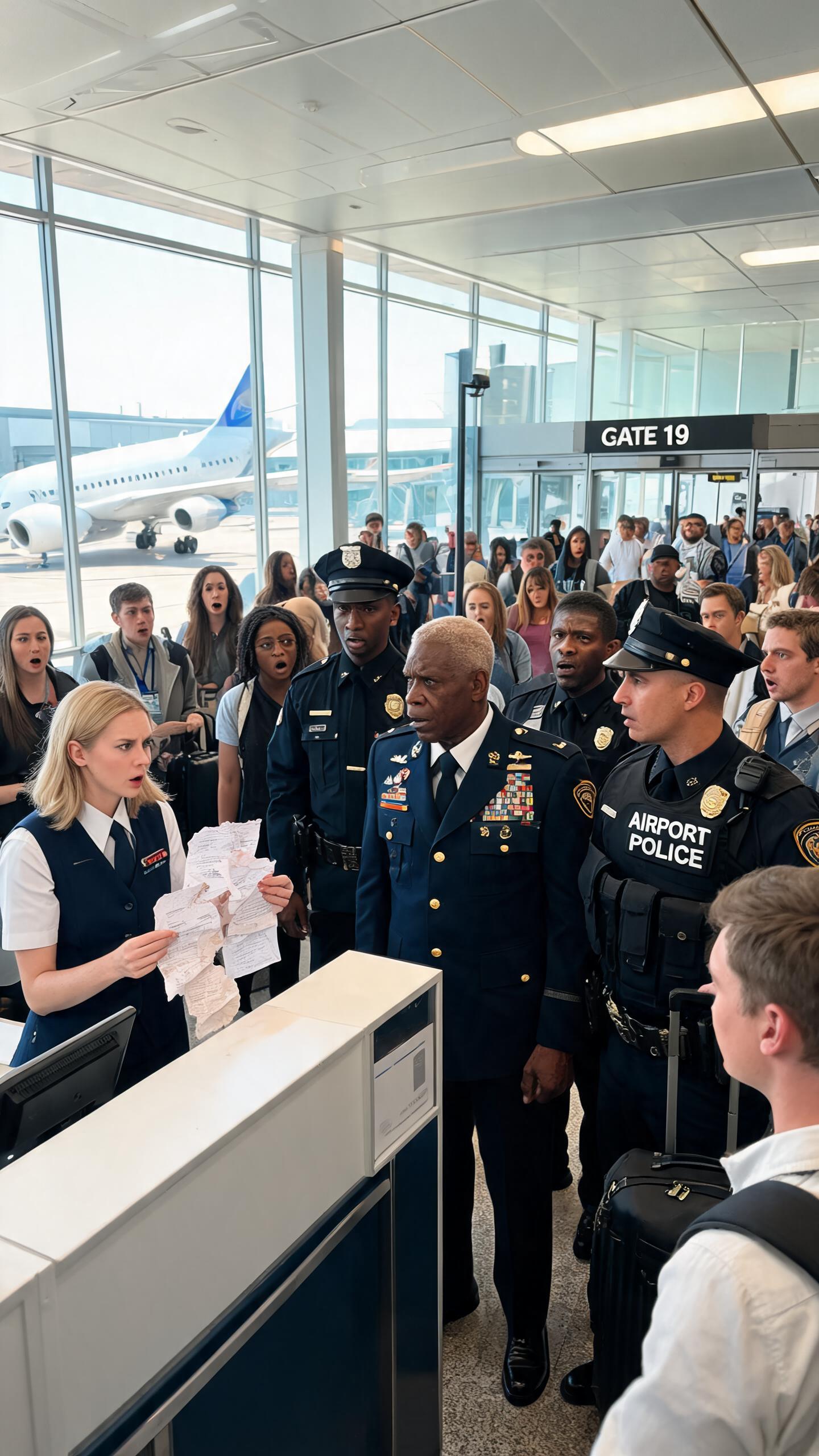
Two airport police officers came around the corner with their hands near their holsters.
I raised my palms before they asked.
Because I had buried enough young men to know the difference between winning a moment and preserving a mission.
Then cold metal closed around my wrists while the plane carrying my soldier moved away from the gate without me.
She Thought The Uniform Was The Weakest Thing About Me
The younger officer shoved me against the counter harder than procedure required.
"You threatened airline staff?"
"No," I said. "I instructed her not to destroy federal orders."
Denise laughed from behind the desk.
"Federal orders. Listen to him. Next he'll say the President sent him."
The passengers watched.
Some filmed.
Some pretended not to.
A man in a golf shirt muttered, "This is why they need to check these stolen valor types."
I turned my head just enough to look at him.
He looked away.
The older officer, Sergeant Patel, had not spoken yet. He was standing near the torn packet on the floor, eyes moving between the seal, the boarding screen, and the ribbons on my uniform.
He knew enough to be uneasy.
"Officer," I said, "before you process me, pick up the order packet and look at the tracking code on page two."
The younger officer tightened the cuffs.
"You do not give orders here."
"Today," I said, "I do."
Patel bent slowly and picked up the damaged pages.
Denise snapped, "Do not humor him. My supervisor already told me we have people trying to scam military boarding privileges all the time."
"Your supervisor is wrong," I said.
"My supervisor is my uncle."
That explained the confidence.
Not competence.
Confidence.
Patel unfolded the first page. His expression shifted before he reached the second.
Then he saw the watermark.
The encrypted casualty transfer number.
The Department of Defense authorization line.
The name of the fallen soldier.
His face went pale.
"Colonel Ellison," he said quietly.
The younger officer's grip loosened.
Denise rolled her eyes.
"Oh, please."
Patel turned the page toward her.
"Ms. Carver, this is authentic."
"It is paper."
"It is a federal military escort order."
"Then he should have arrived earlier."
The sentence hit harder than the cuffs.
Not because of me.
Because Sergeant Owen Whitaker had arrived everywhere too early.
Too early to war.
Too early to death.
Too early into the cargo hold of a commercial plane while strangers argued over whether the man assigned to bring him home looked official enough.
Patel unlocked my cuffs with shaking hands.
"Sir, I am sorry. I can radio the tower. We may be able to bring the aircraft back."
I looked through the window.
Flight 2861 was already moving toward the runway.
Calling it back would delay the transfer, trigger a chain of paperwork, and leave Owen's mother waiting longer with no explanation but another institutional failure.
I closed my eyes once.
Then opened them.
"No," I said. "Let him go home."
Patel swallowed.
"Sir."
I reached for the torn orders.
Denise held up both hands.
"This is ridiculous. He scared me. He slammed the counter. I want a report."
"You will get one," I said.
She smirked again.
"Good."
I pulled my secure phone from my inner pocket.
It was a plain black device with no personal apps and no patience for airline hierarchy.
I dialed the number I had hoped not to use.
General Ruth Kincaid answered on the first ring.
"Ellison."
"General," I said, watching the plane lift from the runway, "the escort protocol has been broken. Sergeant Whitaker is airborne without assigned military custody."
There was no immediate response.
Only the sound of command turning into consequence.
"Give me the airline, airport, flight number, and employee names," she said.
Denise's smile faded as I read her name tag aloud.
"Denise Carver. Gate C17. Her supervisor appears to be a relative."
General Kincaid's voice went cold.
"Stay where you are, Colonel."
"Yes, ma'am."
"And Marcus?"
"Ma'am?"
"They will learn the difference between a customer complaint and a federal incident."
The line went dead.
Denise laughed, but it came out thin.
"Was that supposed to scare me?"
I looked at the torn page in my hand.
"No. It was supposed to notify command."
By Morning, Her Desk Was The Smallest Part Of The Disaster
The first call came to the gate manager within four minutes.
His name was Brian Carver.
Denise's uncle.
He arrived red-faced and annoyed, already speaking before he reached us.
"What is going on here?"
Patel held out the order packet.
Brian glanced at it, then at Denise, then at me.
"We regret any inconvenience," he said, in the tone of a man trying to pour water on a live wire with a paper cup. "But our employees have discretion when a passenger behaves aggressively."
"I am not a passenger," I said. "I am a military escort assigned to human remains."
The words changed the faces around us.
A woman near the stroller covered her mouth.
The college kid stood up slowly.
The man in the golf shirt sat down as if his knees had gone soft.
Brian cleared his throat.
"Colonel, I am sure we can resolve this with a travel voucher and a later flight."
I stared at him.
"A travel voucher."
He heard it then.
How small the words were.
How ugly.
Denise crossed her arms.
"He was rude to me."
Patel said, "Ms. Carver, you tore a federal order."
"I tore a fake document."
"It was not fake."
"How was I supposed to know?"
For the first time, I let my anger show.
Not loudly.
Loud anger gives people like Denise something to point at.
I lowered my voice instead.
"You were supposed to read it."
No one spoke after that.
By 1800 hours, the airport operations director had arrived.
By 1835, two representatives from the airline's corporate crisis office appeared with identical expressions and no answers.
By 1900, the Department of Defense had suspended all nonessential personnel movement contracts with the airline pending review.
By 1930, a federal liaison officer in a navy suit stood beside me at C17 and asked Denise Carver whether she understood that destruction of official military travel documents could be referred beyond the airline's internal discipline process.
She stopped asking for my arrest after that.
Her uncle stopped saying voucher.
The passengers who had filmed the first part were suddenly filming the second part too.
But I did not care about viral clips.
I cared about the empty place beside Sergeant Whitaker's transfer case.
I cared about his mother waiting in Ohio.
I cared about the note in his casualty file that said he had once written, If Colonel Ellison is there, tell Mom I'm not alone.
I was not there.
That failure sat in my chest like stone.
At 2100, General Kincaid called again.
"Whitaker landed safely," she said.