Five Years After Her Husband Walked Out for His Assistant, She Saw Them Step Onto a Luxury Yacht Together, Then Their 5-Year-Old Son Ran to Her Crying, "Mommy!" and the Letter She'd Kept Finally Exposed His Mother's Secret
"I believed it because it sounded possible," she said quietly. "We had been rotting for months. You were angry all the time. We spoke through lawyers by the end. When I read that letter, I thought it was cruel, but I did not think it was impossible."
Gavin closed his eyes. The truth hurt because it had room to live inside the man he had been then.
"Evelyn came to my apartment before the hearing," Mila continued. "She brought a certified check and told me taking the money would be the cleanest choice for everyone. When I refused, this letter showed up and you never came." She tapped the clinic paper. "So I left."
She told him about the tiny rental in another state. The jobs she stitched together while pregnant.
She told him about the nights she held her stomach and tried to decide whether Noah would be safer never knowing his father's world. She told him about the first time he asked why every other child had a dad at school pickup.
She told him about the envelope she kept hidden inside the back of a winter-clothes box. Not because she cherished it. Because one day Noah would ask for a full history, and she had promised herself she would not lie to him twice.
Gavin could not lift his head.
Sabrina broke before he did. "Stop looking at me like that," she snapped, tears starting down her face. "Your mother started it. She told me exactly what to do."
The room went silent except for the engines under the floor.
"She gave me access to your executive files," Sabrina said in a rush. "Your digital signature. Your email drafts. Even the medical insurance portal she used to confirm Mila's pregnancy. She said if the baby entered the family, everything would get complicated."
Gavin stared at her. "You forged this?"
"Yes." Sabrina's mascara had begun to smear. "But I didn't invent the plan. Evelyn did. She said Mila was a threat. She said you would thank her once the mess was cleaned up. I thought if I helped, you would stay with me and never look back."
Mila stood very still while the past rearranged itself out loud. She had waited years for the truth, and when it arrived, it did not feel clean. It felt heavy, ugly, and terribly late.
She did not feel vindicated. Vindication would have required satisfaction. What she felt instead was grief for the younger version of herself who had read that letter alone, pressed one hand to her belly, and decided she would have to become enough for two people overnight.
Sabrina kept talking because fear had loosened every hidden piece. Evelyn had blocked calls. Evelyn had instructed staff not to pass messages. Evelyn had framed every silence as protection of the Tucker name.
Sabrina had typed the words, attached the signature, and sent the knife.
When Noah's footsteps sounded in the corridor outside, Gavin turned toward the door with such naked anguish that Mila almost looked away. Her son was five years old, and the adults who should have protected him were only now admitting who had stolen his father.
"We're going to see my mother," Gavin said at last. His voice had become unnaturally calm. Mila had heard that tone only once before, years earlier, right before a boardroom layoff. It meant something was already over.
His Mother's Secret
Evelyn Tucker received them in the drawing room of the family estate as if she were expecting a florist instead of the collapse of her own design.
A china cup rested beside her hand. Lamps glowed softly against expensive wood paneling. For one strange second, the room looked almost peaceful.
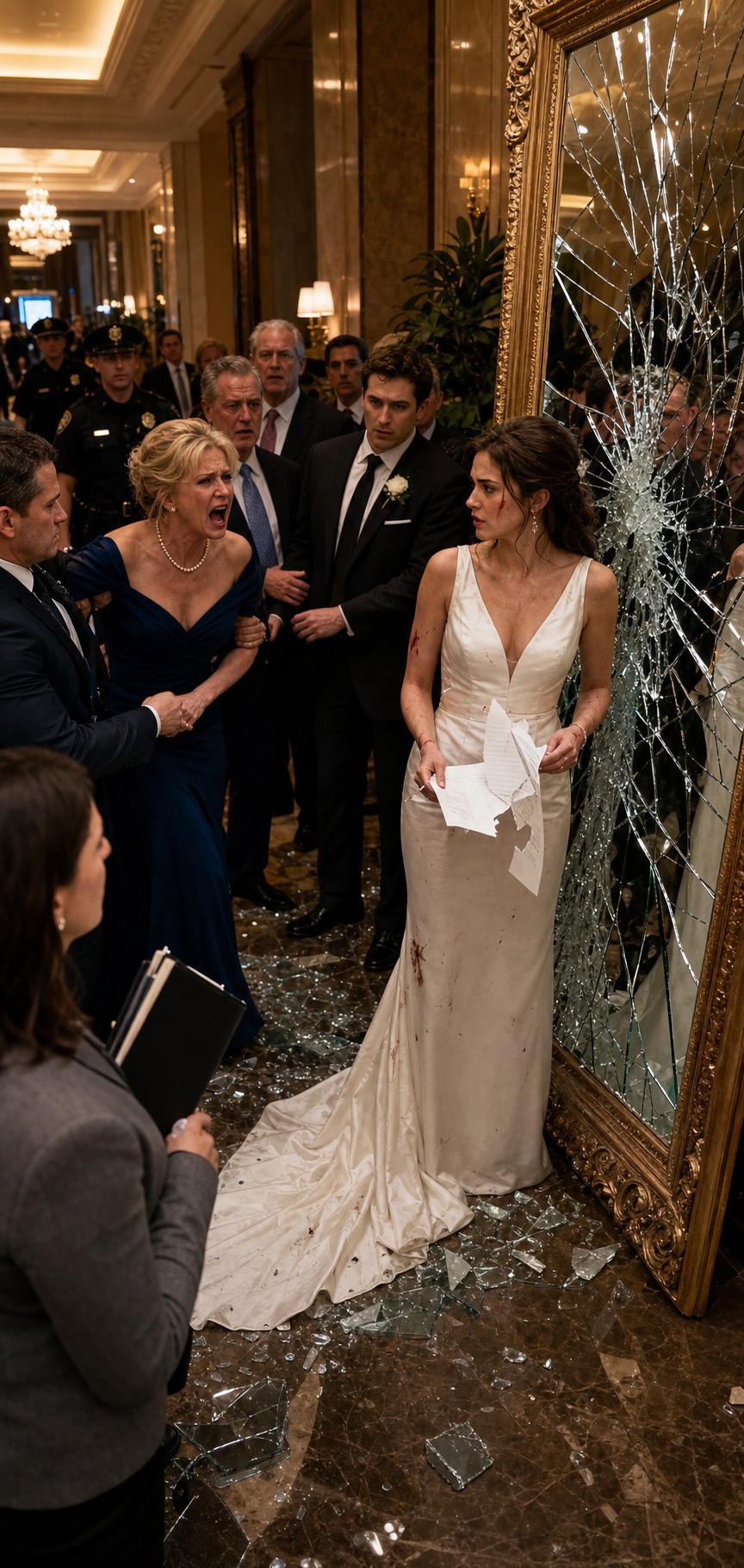
Then Gavin dropped the clinic record and forged letter on the coffee table between them.
"Explain it."
Evelyn's eyes flicked over the papers and then to Sabrina, who was already unraveling beside the doorway. The older woman's first instinct was still control.
"I don't know what game this is," she said. "If that girl brought forged documents into my house, that's hardly my responsibility."
Mila stepped forward before Gavin could answer. "You brought a certified check to my apartment and told me ending the pregnancy would be cleaner than fighting a family with more money than mercy. I still remember the envelope. I remember the exact perfume you wore."
Evelyn's expression shifted, but only slightly. "I was trying to avoid a disaster."
Sabrina let out a cracked laugh. "Tell him the whole thing. Tell him you gave me his passwords. Tell him you told me a child with Mila would split the trust and hand leverage to the wrong woman."
Gavin looked at his mother the way one might look at a fire after realizing it started from inside the house. "Did you access my insurance records?"
"Yes," Evelyn said at last. "Because no one else in that family was willing to think strategically."
The confession came in pieces. She had believed Mila married for access. She had feared a child would complicate inheritance and governance.
She had told herself that one cruel intervention was better than a lifetime of contested control. When Mila refused the money, she escalated.
"You asked her to end the pregnancy," Gavin said flatly.
"I asked her to make a practical choice."
"You asked the mother of my child to erase him before I even knew he existed."
Evelyn set down the performance of regret because it no longer bought her anything. "I protected what generations built. One day you may understand that."
"No," Gavin said. "One day I may understand how much cowardice can hide behind the word family, but I will never call this protection."
He told Sabrina their relationship was finished and ordered her to send every device, password, and business file to his legal team before midnight.
He told Evelyn she was cut off from his home, offices, and any future contact with Noah unless Mila decided otherwise.
Then he called counsel from the driveway. He asked for criminal complaints, fraud review, and digital forensics before the gate had even closed behind them.
Learning to Be a Father
Legal action moved fast because guilt often does. But what mattered most to Mila happened much slower. Gavin did not try to buy absolution with grand gestures. He started with consistency.
The first visit happened in a downtown park in Westbridge. He arrived ten minutes early carrying a soccer ball, two bottles of water, and the stiff uncertainty of a man who knew how to negotiate acquisitions but not how to ask a five-year-old what games he liked.
He did not wear the polished armor of his old life that day. No driver. No assistant. No expensive performance. Just Gavin, standing beside a bench and trying not to look like he was waiting to be judged by the only verdict that mattered.
"Do you want to kick this around?" he asked Noah.
Noah considered him gravely, then said, "Mom says people who show up once don't count yet." Gavin absorbed the blow without flinching. "Then I'll keep showing up," he answered.
He did. Park benches. Library afternoons. Dinosaur pancakes on Saturday mornings after Mila finally allowed short breakfast visits. School pickup once a week. Bedtime video calls when court filings kept him at the office too late.
When Noah liked a routine, Gavin learned it. Strawberries had to be sliced thin. The dinosaur pancakes needed one blueberry eye and one chocolate-chip eye or Noah would call them "unfinished creatures."
Library books were stacked tallest to shortest because apparently that made them feel safer.
Those details did more to convince Mila than any speech could have. Men who intended to disappear again did not memorize cereal brands or keep a spare child's toothbrush in their guest bathroom just in case a rainstorm delayed a handoff.
He even kept a notebook in his kitchen drawer with Noah's favorite foods, the names of his classmates, and reminders about which stuffed shark had to be placed on the left side of the pillow at bedtime. Mila found out by accident and said nothing, but she never forgot it.
Noah tested every promise. "Will you still come if I get mad?" "Will you still come if Mommy says no to something?" "Will you still come if I break a lamp?" Gavin answered all three the same way: "Especially then."
Mila watched from the edges at first, suspicious of how naturally tenderness could imitate commitment.
But Gavin did hard things the easy version of him would once have skipped. He apologized without defending himself. He listened when she named the damage. He did not ask to be rewarded for basic decency.
One afternoon on the riverwalk, Noah asked the question Mila had dreaded most. "Where were you when I was born?"
Gavin knelt so they were eye level. "I was living a lie somebody built around me," he said. "But I also let myself become a man who could believe the worst about the people he loved. That's on me. I can't fix when I was missing. I can only tell the truth and stay now."
Noah thought about that for a long moment while his ice cream melted down his wrist. "So you were late?" he asked.
"Very late."
"Okay," Noah said. "Then don't be late anymore."
That sentence changed the air between them. Gavin restructured board meetings around school calendars. He learned which cereal Noah would only eat dry. He sat in the front row at the spring play and clapped hardest when his son forgot one line and recovered with stubborn dignity.
After the play, Noah ran into the lobby still wearing his paper sailor hat from the production and launched himself straight into Gavin's arms. "Did I sound brave?" he asked. Gavin said, "You sounded like yourself," and Noah smiled as if that were the highest praise possible.
At night, after Noah slept, Mila and Gavin talked on her porch about the marriage that had already been cracking before Evelyn drove a knife into it. Pride. Work. Resentment. Silence. He did not blame his mother for every flaw. Mila respected that more than any apology.
Some of those porch talks ended in tears. Some ended in silence. A few ended in laughter so surprised it startled them both. Rebuilding did not mean pretending the old wound never split them open. It meant learning how to touch the scar without reopening it.
The DNA results arrived by certified mail one week later. The paper was a formality. The truth had been living in Noah's face since the yacht.
Even so, Gavin's hands shook when he knelt on Mila's living-room rug and said, "Noah, there is something I should have told you sooner. I am your dad."
Noah blinked, looked at Mila for confirmation, then back at Gavin. "My real dad?" he asked.
"Yes," Gavin said. "The one who was late. The one who is staying now."
Noah thought about it, opened his arms, and said, "Then you can hug me now."
The Photo on the Sailboat
A year later, they returned to the water without chandeliers, premium suites, or polished lies.
Gavin rented a modest sailboat out of Harbor Point for a single day and brought sandwiches, sunscreen, juice boxes, and a camera that still had the first school-play photos saved on its card.
Noah wore a bright orange life jacket and insisted on bringing the old toy airplane. The silver compass locket bounced against his chest every time he ran from bow to stern. Mila kept reaching out to steady him, then laughing when he wriggled free and declared himself first mate.
The boat cut through the blue near Sunset Keys with none of the theatrical luxury of the Azure Crest. Mila loved it immediately. Nothing on that deck asked her to perform. The day belonged to people, not appearances.
Gavin showed Noah how to hold the tiller for thirty careful seconds.
Noah took the duty seriously enough to bite his lower lip, which made Mila and Gavin look at each other and laugh at the same time. It was the kind of shared glance that had once lived in their marriage before everything became a contest.
They anchored in a quiet cove and ate with their feet dangling over the side. Noah asked if fish ever got tired of seeing the same sky from underneath. Gavin answered with complete seriousness. Mila nearly choked on her sandwich laughing.
In the afternoon, Noah made Gavin help him send the toy plane "on patrol" across the deck while Mila pretended not to notice that both boys were using dramatic pilot voices. The scene was so ordinary it hurt. Ordinary had once felt impossible.
At one point Noah sprawled between them with his shoes kicked off and announced that next summer they should bring binoculars, three kites, and exactly six chocolate muffins.
Gavin began negotiating muffin numbers as if the treaty mattered. Mila listened and let herself imagine a future without flinching.
Later, when the sun lowered and the whole bay turned gold, Noah pointed at the empty bow and announced that it was picture time. He ordered Mila to stand on one side of the mast and Gavin on the other, then frowned at the distance between them.
"Closer," he said.
They obeyed. Gavin slid an arm around Mila's shoulders, lightly enough to give her space to refuse. She did not refuse. She leaned in just enough that Noah's face lit with satisfaction.
"Now it looks like a real family," he declared.
Mila felt the old fear twitch inside her anyway. Real families had once seemed like the one thing life could revoke without warning. But then Noah reached for both of them at once, as if the choice had already been settled, and the fear lost some of its authority.
She did not mistake that for a fairy-tale ending. Trust still needed tending. Old damage still had edges. But standing there in the wind, she finally understood that hope no longer felt reckless. It felt earned.
The captain lifted the camera. Before the shot went off, Noah wedged himself between them, pressing both small shoulders against their legs as if physically locking the picture together. The locket flashed once in the last wash of daylight.
"Wait," Noah said. "One more."
He tipped his face up toward Gavin, squinting into the sunset. "Dad, don't close your eyes this time."
The word landed so cleanly that Gavin could not hide what it did to him. Joy crossed his face first. Then grief for everything stolen. Then gratitude strong enough to steady both. He bent, pulled Mila and Noah against him, and whispered, "I won't, son. Not ever again."
The camera clicked.
The photo caught three people with windblown hair, wet eyes, and a future that had not erased the missing years but had finally stopped kneeling to them.
Later, Mila would tuck that picture into the same envelope that once held the clinic paper and forged letter. She would keep all three pages together. Not because pain deserved a shrine. Because the ending mattered as much as the theft.
The papers would always show what had been done to them. The photo would show what failed to stay broken.