My Family Bought The Blue-Shuttered House I Had Saved For To Humiliate Me, But They Didn't Know I Already Owned The Stone Manor Next Door, And Their Victory Toast Became Their Public Downfall
Music in the south gallery.
A small charity auction for the children's hospital lodging fund.
I invited everyone.
My parents.
Natalie and Paul.
My cousins.
My uncles.
My mother's bridge friends.
Mrs. Alden from down the street.
The historical society.
The hospital foundation board.
Denise and her crew, because they had earned the right to see the house with lights on and dust swept away.
My mother replied after eleven minutes.
Christmas Eve is at Briar Lane House.
I wrote back:
You're welcome to host Christmas Day.
She did not answer.
Two days later, Aunt Judith forwarded me the family email.
Elaine Vale had written that my event was "uncertain due to ongoing construction," "not a proper family Christmas," and "better suited to donors than relatives." She added that everyone should come to Briar Lane House, where tradition would be respected.
Natalie replied all:
Mom is right. Meredith's place is more like a public building than a home anyway.
For ten minutes, I sat in the unfinished music room and stared at that sentence.
Then I opened a new message.
I attached the catering contract.
The occupancy approval.
Photographs of the completed dining room, the south gallery, the library, and the front hall with garland wound along the staircase.
I wrote:
Christmas Eve at Ashford Hall is confirmed. Doors open at six. No one has to choose sides, but no one should be misled.
Aunt Judith replied first.
We'll be there.
Then Uncle James.
Do you need extra auction paddles?
Then cousin Rebecca.
The dining room is stunning.
Within twenty-four hours, thirty-eight people had confirmed.
My mother called crying.
Not gentle crying.
Angry crying.
"How could you do this to me?" she demanded.
I was standing in the ballroom while two electricians tested the chandelier lifts.
"Do what?"
"Turn my family against me."
"I invited them to dinner."
"You knew they would choose the bigger house."
That sentence told on her so completely that I almost felt sorry for both of us.
"Is that why you chose Briar Lane?" I asked.
She inhaled sharply.
"Don't twist this."
"I'm not twisting it."
"You are punishing us because your father made one unfortunate comment."
One unfortunate comment.
My family's preferred name for cruelty was always smaller than the cruelty itself.
"Mom," I said, "Dad bought the house I had saved for, invited relatives to watch, spun the keys in my face, and told me wanting something didn't mean I deserved it."
Silence.
Then, very quietly, she said, "He shouldn't have said it that way."
That way.
Not that thing.
Just that way.
"I have to go," I said.
"Meredith."
"Yes?"
Her voice changed.
"Briar Lane has been difficult."
I looked up at the chandelier.
"How difficult?"
"Your father won't tell me everything."
There it was.
The first hairline crack.
For a moment, my anger stepped aside and left room for the daughter who had once wanted nothing more than to be trusted with the truth.
"The east wall needs work," I said. "The sunroom floor too. And if Natalie is changing the back parlor, she needs historic board approval."
My mother did not ask how I knew.
She already knew I had known.
"Why didn't you say something?"
"I did."
"No, you made little comments. Gutters. Damp. Approval."
"You made it clear my comments were not welcome."
She started to cry again, but softer now.
"Your father put a lot into this house."
"To hurt me."
"To help Natalie."
"Same money. Different story."
She hung up first.
Christmas Eve arrived cold and clear.
By four o'clock, Ashford Hall smelled of pine, beeswax, roasted pears, and the faint mineral scent of old stone warmed by new heat. Candles lined the mantels. Musicians tuned in the gallery. The dining room table stretched under garland, silver, and low bowls of white roses. In the ballroom, donated auction items sat under small lamps: weekend getaways, signed prints, a chef's dinner, a restored antique rocking horse Denise had found in the carriage house and repaired herself.
At five-thirty, I walked through the house alone.
Not because I was dramatic.
Because I needed to see it before people filled it.
The library shelves were still half empty. The west wing needed another month. The attic smelled like old trunks. The service stairs creaked. Ashford Hall was not perfect.
That was why I trusted it.
Perfect things had always been dangerous in my family.
At six, the guests began arriving.
Aunt Judith came first with two pies and red eyes.
"Don't make me cry in the foyer," she warned.
"I wouldn't dare."
Mrs. Alden arrived with a tin of shortbread and a story about attending a dance in the Ashford ballroom in 1968. Denise came in a black dress and work boots because she claimed the house would not recognize her otherwise. Cousins filled the entry. Children ran toward the music and were gently redirected by volunteers. Hospital board members admired the restoration without making it sound like a museum tour. Neighbors stood in the gallery and whispered the names of rooms they had only seen from the street.
At 6:42, my family arrived.
All four of them.
My father wore a tuxedo.
My mother wore emerald silk.
Natalie wore winter white.
Paul looked as if he would rather be anywhere with lower ceilings.
For a few seconds, nobody moved.
Then Aunt Judith crossed the foyer and kissed my mother's cheek.
"Elaine," she said warmly, because kindness is not the same as surrender.
My mother looked over Judith's shoulder at the staircase, the garland, the chandelier, the guests moving comfortably through rooms she had told them would be unfinished.
"It's lovely," she said.
It cost her something.
I heard it.
"Thank you."
Natalie gave me a brittle smile.
"You certainly made your point."
"Dinner starts at seven."
My father looked around the entry with the expression of a man searching for a flaw large enough to stand on.
"Impressive," he said.
From him, that meant unforgivable.
For the first hour, they behaved.
That worried me more than if they had started immediately.
My father spoke to board members as if he had been instrumental in my financial education. My mother told Mrs. Alden that she had always encouraged my independent streak. Natalie stood near the auction table and mentioned twice that Briar Lane House had "more warmth" and "less institutional grandeur." Paul drank club soda and stared at the floor whenever anyone asked about renovations next door.
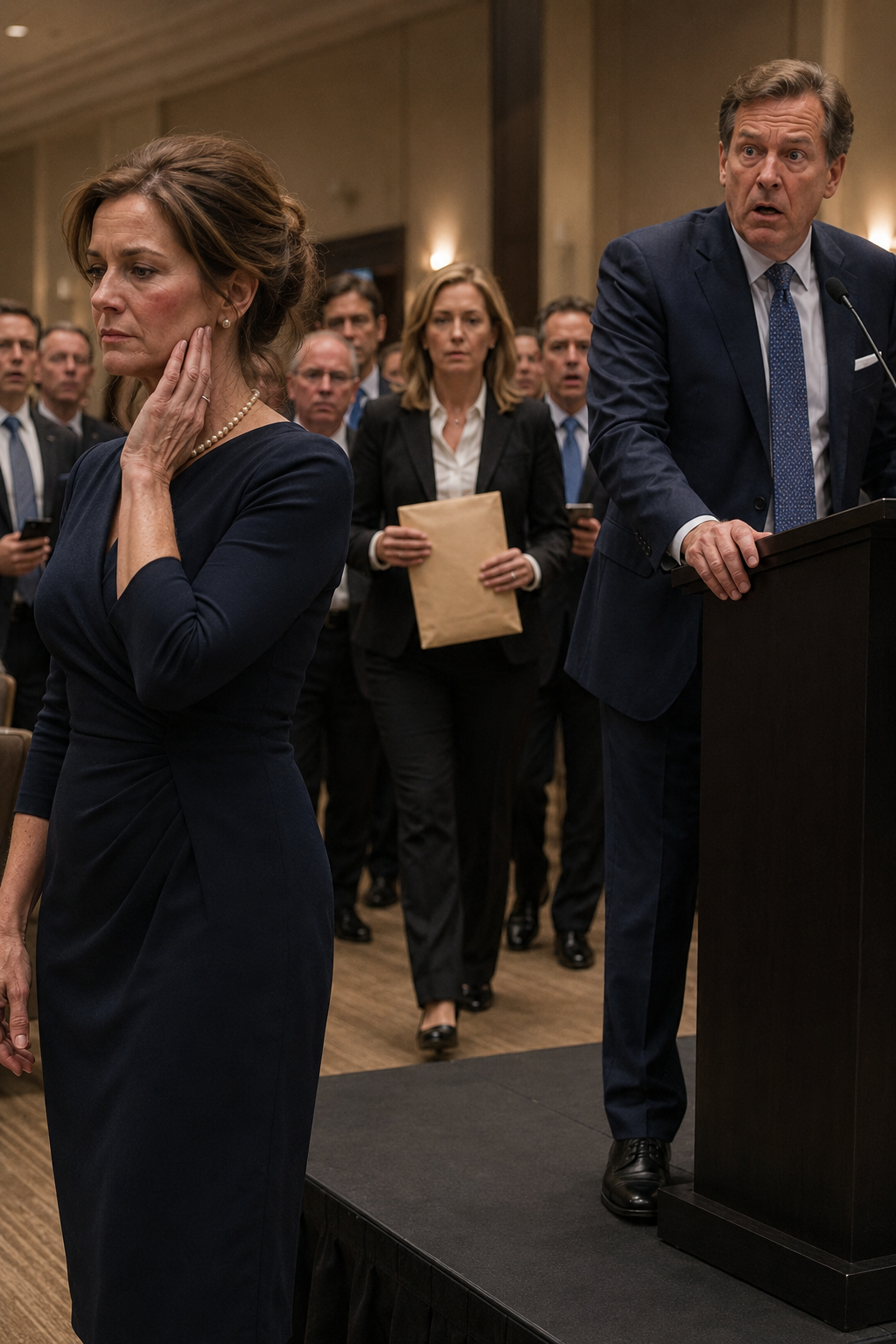
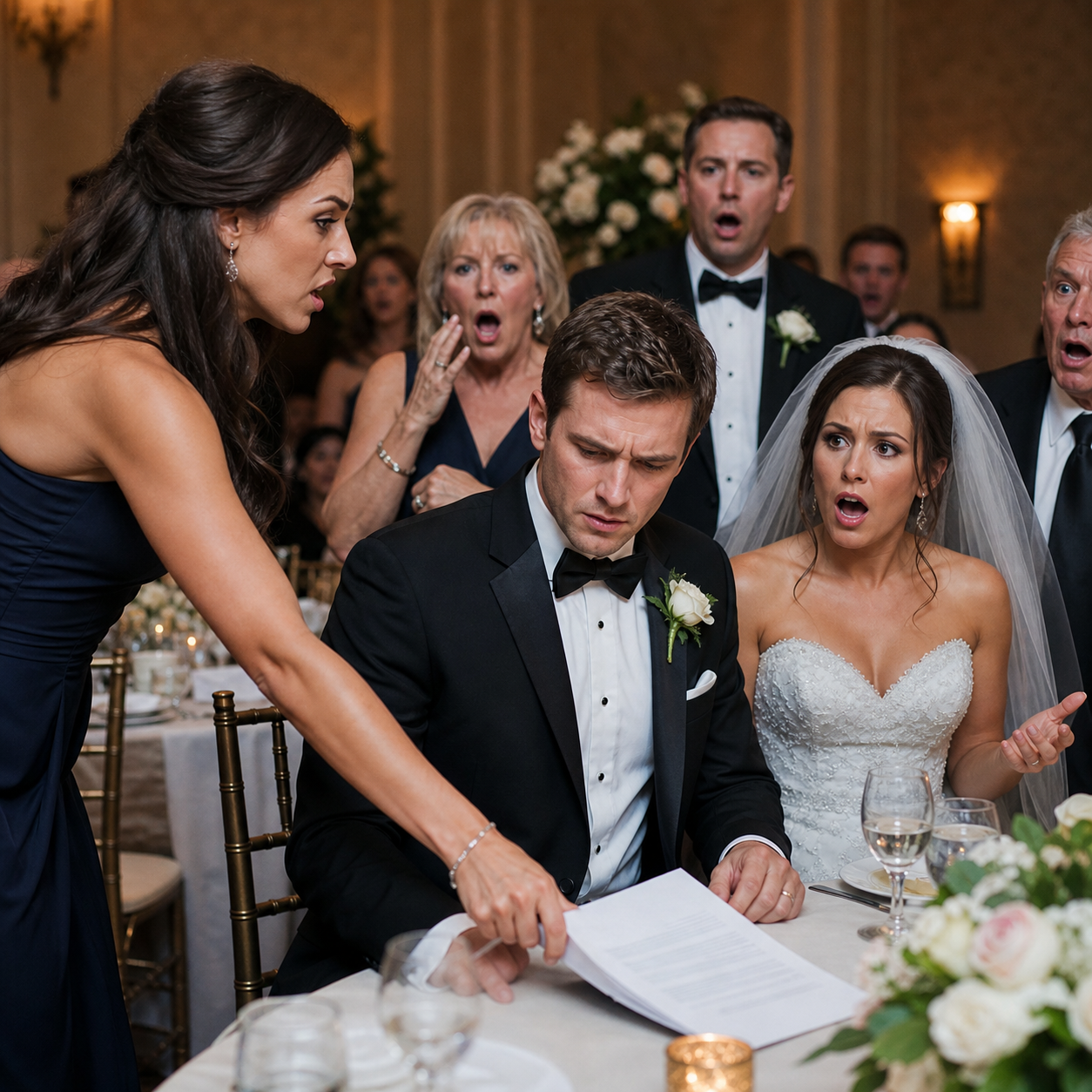
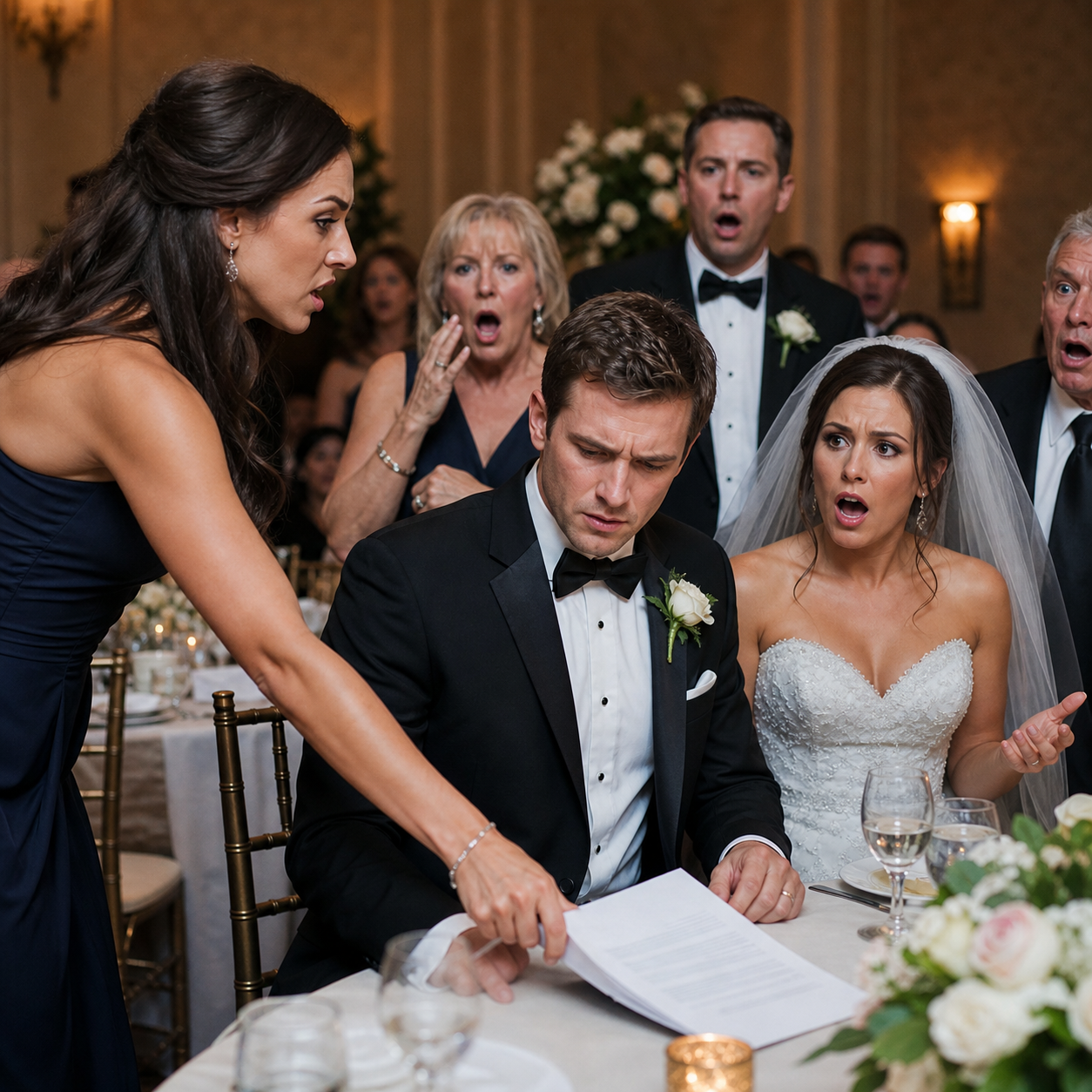
Then came the toast.
I had planned a short welcome before dinner. Nothing sentimental. Thank guests, explain the lodging fund, honor the workers, invite everyone to eat.
My father intercepted the moment.
He stepped beside me in the dining room and lifted his champagne glass before I could speak.
The old reflex moved through the family so quickly it was almost beautiful.
People quieted.
Graham Vale had taken the floor.
He had always believed rooms belonged to whoever spoke first with confidence.
"If I may," he said.
I looked at him.
"Briefly," I said.
A few people chuckled.
His jaw tightened.
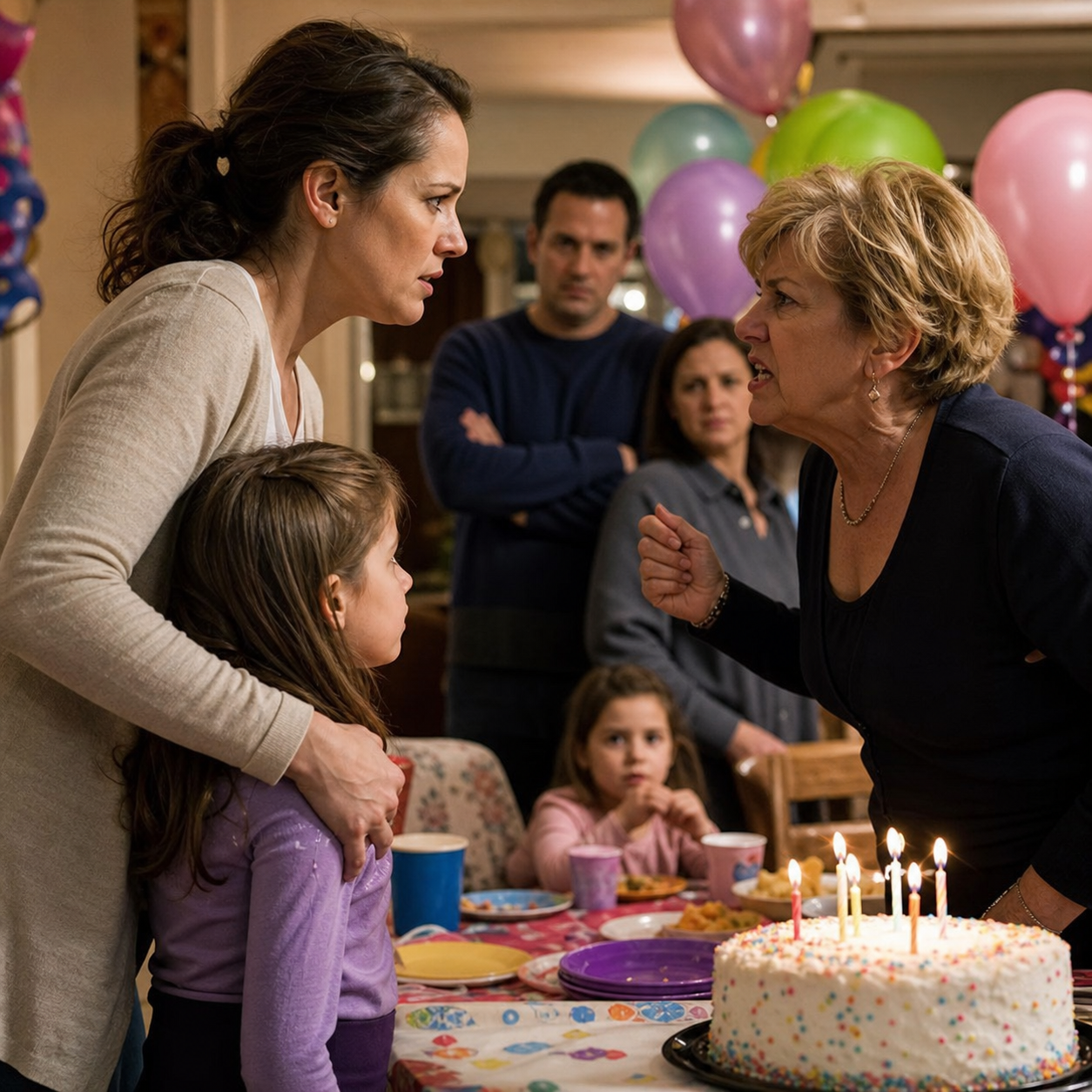
"Tonight," he began, "we gather in a house that has certainly made an impression."
Polite laughter.
"My daughter Meredith has always had a flair for the dramatic."
The room cooled by a few degrees.
Aunt Judith set down her glass.
My mother closed her eyes for half a second.
My father continued.
"And while some of us may prefer a home that feels like a home, not a courthouse with candles, I suppose we can admire ambition when it is directed toward a good cause."
Natalie's face went pale.
Even she knew he had gone too far.
But my father had mistaken silence for permission his whole life.
"Still," he said, turning slightly toward me, "houses do not make families. Humility does. Gratitude does. Remembering who taught you the value of a dollar does."
I could have stopped him.
I did not.
Because at the far end of the dining room, Mrs. Alden had taken out her phone.
So had cousin Rebecca.
So had two hospital board members who had learned, over decades of fundraising dinners, that the most dangerous speeches are the unscripted ones.
My father lifted his glass higher.
"To family," he said. "May we all learn that wanting the grandest room does not mean we deserve to stand in it."
There it was.
Again.
The same blade.
Just polished for Christmas.
For one second, Ashford Hall held its breath.
Then Denise Morton spoke from near the doorway.
"Mr. Vale," she said, "is that why you ignored the stop-work notice next door?"
The room turned.
My father's face hardened. "Excuse me?"
Denise did not move.
"Briar Lane House. The county posted a notice after unapproved structural work began in the back parlor. My crew was asked to take over the job. I declined because the permits weren't clean."
Natalie's glass trembled.
Paul whispered, "Denise, please."
That was when I understood.
Paul had called her.
Of course he had. He was not foolish. Just weak in the way men become weak when comfort has always arrived before consequence.
My father gave a tight smile.
"This is hardly appropriate dinner conversation."
"Neither was insulting your host," Aunt Judith said.
A small sound moved through the room.
Not laughter.
Recognition.
My mother looked at my aunt as if she had been slapped.
Mrs. Alden lowered her phone only slightly.
"Graham," she said, "the historic review board meets in January. If Briar Lane's covenant has been violated, it will be public record."
My father turned on her. "This is a family matter."
"No," Mrs. Alden said. "A protected house is a community matter."
Natalie stepped forward, panic cutting through her polish.
"We didn't know about the covenant."
I looked at her.
She looked back, and for the first time that night, I saw something naked in my sister's face.
Not remorse.
Fear.
"You didn't know," I said, "because you were too busy celebrating that I wouldn't get it."
The sentence did not sound angry.
That made it worse.
My father pointed at me.
"You set this up."
"No," I said. "I hosted dinner."
"You knew that house had problems."
"I knew because I paid for an inspection before I decided not to buy it."
The room shifted.
My mother whispered, "Meredith."
"I mentioned the east gutter the day you gave me the tour. I mentioned the damp. I mentioned approvals. You all laughed."
Paul put his glass down.
"The contractor says the sunroom floor has to come up," he said quietly.
Natalie turned on him. "Stop."
He did not stop.
"And the bridge loan is due in March."
My mother's face drained of color.
That was the first time I realized she had not known that part.
My father said, "Paul."
Paul looked at him with months of fear and resentment packed into one exhausted face.
"No," he said. "I'm done pretending this was a cash purchase. You used the line of credit. You told Natalie the renovation would be quick. You told Elaine the investment would make the family look strong. You told me Meredith would fall apart and everyone would rally around Briar Lane."
The dining room became so quiet I could hear the candles hiss.
My father stared at Paul like he had discovered an appliance speaking.
Natalie covered her mouth.
My mother gripped the back of a chair.
I did not feel triumphant.
That surprised me.
I had imagined, in darker private moments, what it would feel like when the truth finally arrived wearing shoes everyone could hear.
I thought it would feel clean.
It did not.
It felt like watching a wall collapse and realizing people had been living under it.
My father recovered enough to lift his chin.
"This is private financial information."
"You made my humiliation public," I said. "You don't get to demand privacy only when the story turns."
His eyes flashed.
For a second, I was twelve again, waiting at the dinner table while he explained why my science fair prize was nice but not practical, why Natalie's ballet recital taught discipline, why my scholarship was helpful but my tone was unfortunate.
Then the room came back.
My house.
My guests.
My name on the deed.
My glass still untouched beside my plate.
I took it in my hand.
"Since my father has already offered a toast," I said, "I'll keep mine short."
Nobody moved.
I looked first at Denise.
"To the people who repair what others neglect."
Then at Aunt Judith.
"To the relatives who tell the truth before it becomes convenient."
Then at my mother, though she could barely meet my eyes.
"To houses that survive bad owners."
Finally, I looked at my father.
"And to everyone who still believes wanting something doesn't mean you deserve it. You're right. Wanting isn't enough. Work is. Care is. Stewardship is. And sometimes the thing you think you've taken was never the prize."
I lifted my glass.
"Merry Christmas."
Aunt Judith raised hers first.
Then Denise.
Then Mrs. Alden.
Then, one by one, the room followed.
My father did not drink.
My mother did, but her hand shook.
Natalie set her glass down and walked out before dinner.
Paul followed after a moment.
My father stayed through the salad because leaving would have looked like defeat.
That was his tragedy.
He understood appearances so well that he had no exit when appearances turned against him.
By midnight, the auction had raised more than anyone expected.
By morning, three videos of the toast were moving through family chats, neighborhood threads, and the historical society's donor circle.
No one had captioned them cruelly.
No one had to.
My father's own words did the work.
Some Dreams Are Better After They Stop Belonging To You
The fallout came in stages.
First, my father stopped calling.
That felt like peace until I understood it was only strategy.
Then my mother asked to meet for coffee.
Not at Ashford Hall.
Not at Briar Lane House.
At a little cafe halfway across town, the kind of place she would normally dismiss because the tables did not match.
She arrived without jewelry.
I noticed.
I hated that I noticed.
"Your father refinanced more than he told me," she said before the waiter had brought water.
I sat across from her and folded my hands around my mug.
"I'm sorry."
"Are you?"
"For that part, yes."
Her mouth trembled.
It would have been easier if she had been only cruel.
But families are rarely merciful enough to be simple.
My mother had helped hurt me. She had stood on that porch with champagne. She had called cruelty one unfortunate comment. She had taught Natalie, by example, that a woman could protect her place in a family by helping another woman lose hers.
She was also frightened.
And aging.
And married to a man whose confidence had mortgaged more than a house.
"Briar Lane may have to be sold," she said.
I looked out the cafe window at a delivery truck passing through gray slush.
Once, that sentence would have split me open.
Now it landed quietly.
"That might be best."
She stared at me. "You don't want it?"
There it was.
The old dream, placed on the table like a test.
For years, I had imagined buying Briar Lane House from strangers who had loved it gently. I had imagined unlocking the blue front door, not winning it from my family's wreckage.
"No," I said.
My mother looked genuinely confused.
"But you always wanted it."
"I wanted who I thought I would become there."
"And now?"
"Now I know she could live somewhere else."
My mother pressed a napkin to one eye.
"I don't know how to talk to you anymore."
"Maybe start with the truth."
She gave a small, broken laugh.
"The truth is, I liked being Natalie's mother more when she made me feel chosen."
That sentence was ugly.
It was also the first honest thing she had given me in years.
I did not forgive her.
Not there.
Not because of one sentence.
But I respected the cost of saying it.
"And me?" I asked.
She looked down.
"You made me feel judged."
"By existing?"
"By not needing what I knew how to give."
I sat with that.
Outside, the delivery truck was gone. A woman in a red coat hurried past with a paper bag under one arm.
"I needed plenty," I said finally. "You just kept offering approval after I asked for love."
My mother closed her eyes.
We did not hug when we left.
That would have been too easy for both of us.
But she touched my sleeve at the door and said, "The house is beautiful, Meredith."
Not Ashford.
Not the project.
The house.
"Thank you," I said.
Natalie took longer.
Three months longer.
Briar Lane House went back on the market in April, not as a victory trophy but as a listing with careful language about historic charm and needed updates. My father pretended the sale was part of a larger investment strategy. Nobody believed him, but most people were kind enough not to say so to his face.
Natalie came to Ashford Hall on a rainy afternoon while I was in the carriage house reviewing paint samples for the first family suite.
She wore jeans, no makeup, and the guarded expression of someone trying not to look at anything too directly.
"Paul left," she said.
I set down the sample book.
"I'm sorry."
"He says he didn't leave because of the house."
I waited.
"He said the house only made it impossible to keep pretending."
Rain ticked against the carriage house windows.
For once, Natalie did not fill the silence with accusation.
"I hated you," she said.
"I know."
"No, I mean before Ashford. Before Briar Lane. For years."
That surprised me less than it should have.
She looked at the unfinished walls.
"Dad always compared us, even when he was praising me. Natalie is settled. Natalie understands family. Natalie knows what matters. It made me feel safe. Then you would come home with another degree, another job, another life none of us understood, and I felt like you were proving the game was rigged."
"The game was rigged," I said.
She gave a bitter little smile.
"Yes. But I was winning it."
There are apologies people make because they want the discomfort to stop, and apologies people make because they have finally seen the machinery inside themselves.
Natalie's was not complete.
But it had gears showing.
"I'm sorry," she said. "For the porch. For telling them. For enjoying it."
That last part mattered.
More than the first two.
"Thank you for saying that."
She nodded, almost disappointed I had not offered immediate forgiveness.
Then she said, "Do you need help with the family suites?"
I almost said no.
Reflex.
Protection.
History.
But Natalie had spent years arranging beautiful rooms for the wrong reasons. Maybe she could learn to do one useful thing with that eye.
"You can help choose fabrics," I said. "Nothing white."
She laughed.
It was small.
Tired.
Realer than the laugh she had given on the porch months earlier.
My father never apologized.
Not properly.
Men like Graham Vale often age into silence and expect silence to be mistaken for wisdom.
After Briar Lane sold at a loss, he stopped attending neighborhood functions for a while. Then he returned with a softer voice and a careful limp that appeared only when he needed sympathy. He told people he was proud of my charitable work. He called Ashford Hall "Meredith's project" until Mrs. Alden corrected him at a garden committee meeting.
"Her home," she said.
I heard that story from three different people.
It pleased me more than it should have.
One year after the porch, I held another Christmas Eve dinner.
Not as large.
Not as polished.
The first two family suites in the carriage house were finished by then. A little boy from Ohio had stayed there with his grandmother while he received proton therapy at the hospital. His grandmother wrote me a note before they left:
For three weeks, this place made fear quieter.
I framed it in the back office, not the public hallway.
Some things do not need to perform.
That Christmas Eve, my mother came early and helped arrange candles. Natalie brought fabric books for the remaining suites. Paul did not come, but he sent a check for the lodging fund and a note wishing the house well. Aunt Judith brought two pies again. Denise arrived in dress shoes and complained that nobody recognized her.
My father came last.
He stood in the doorway with a bottle of wine in his hand and looked smaller than he had on the porch of Briar Lane House.
"Meredith," he said.
"Dad."
His eyes moved around the entry.
The garland.
The staircase.
The children running carefully under volunteer supervision.
The old stone holding new warmth.
"You've done well," he said.
It was not enough.
But it was more than he had ever given without taking something back.
"Thank you."
For a moment, I thought he might say the rest.
I was wrong.
He handed me the wine and went to find my mother.
I stood there with the bottle in my hand and let disappointment pass through me without building it a room.
After dinner, I walked outside alone.
Snow had started lightly, dusting the hedge between Ashford Hall and Briar Lane House. The blue-shuttered house next door belonged to a retired teacher now, a widow named Marjorie Pike who had bought it with her late husband's pension and a practical understanding of old plumbing. She had repaired the east gutter first.
I liked her immediately.
That night, Briar Lane's porch light glowed through the snow.
For the first time in my life, I looked at that house and felt no ache.
Only recognition.
Some dreams are childhood maps. They get you moving. They teach you direction. They keep you company when nobody else believes you are going anywhere.
But you are allowed to outgrow the destination.
Behind me, Ashford Hall shimmered with music, voices, candlelight, and the ordinary clatter of people learning how to belong without owning one another.
My father had once told me wanting something did not mean I deserved it.
He was right in the smallest possible way.
Wanting had not been enough.
But work had been.
Care had been.
The courage to keep one dream private until it was strong enough to stand in public had been.
I touched the cold iron gate, looked once more at the blue shutters next door, and went back inside the larger house I had never needed my family to imagine for me.