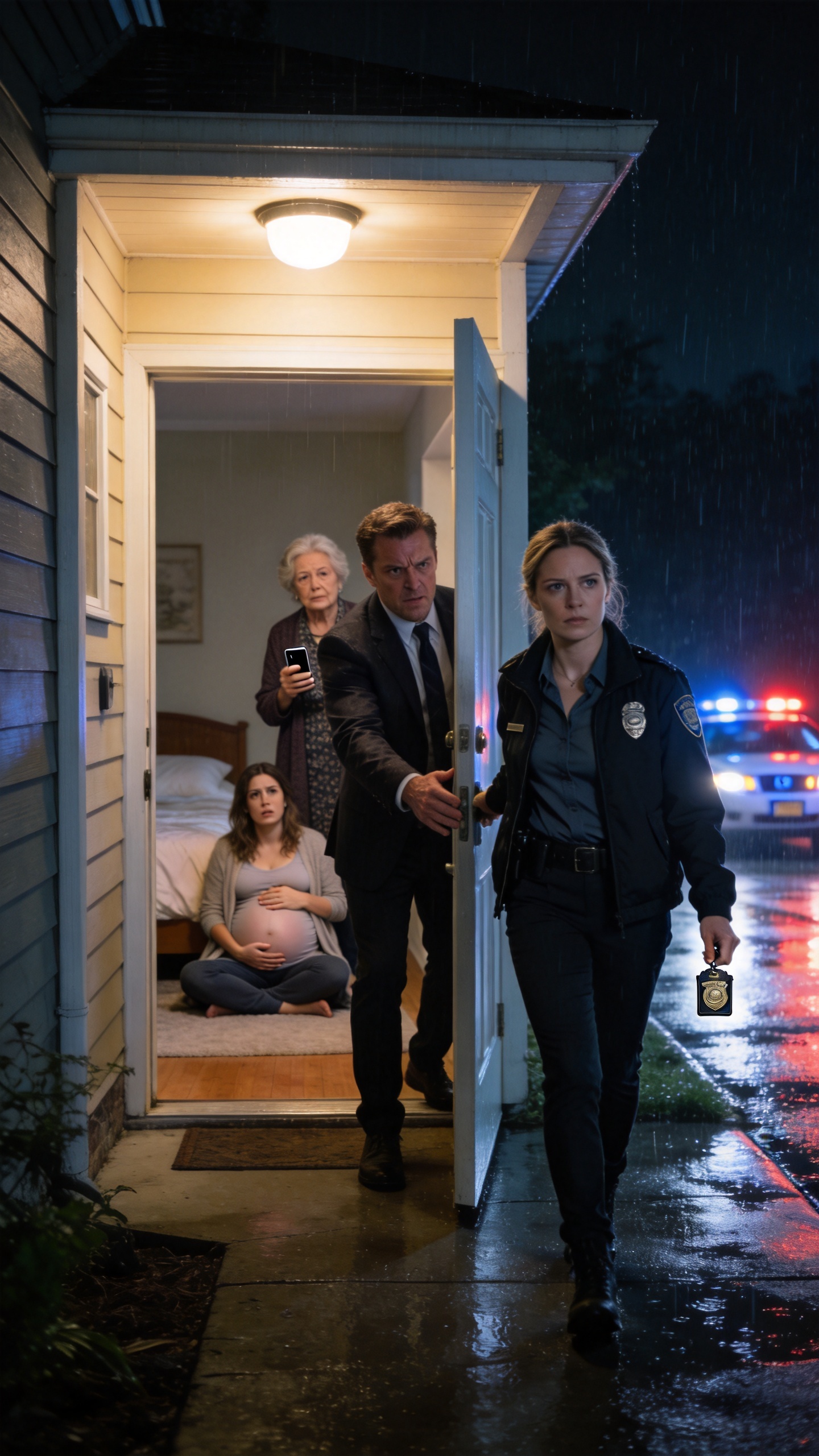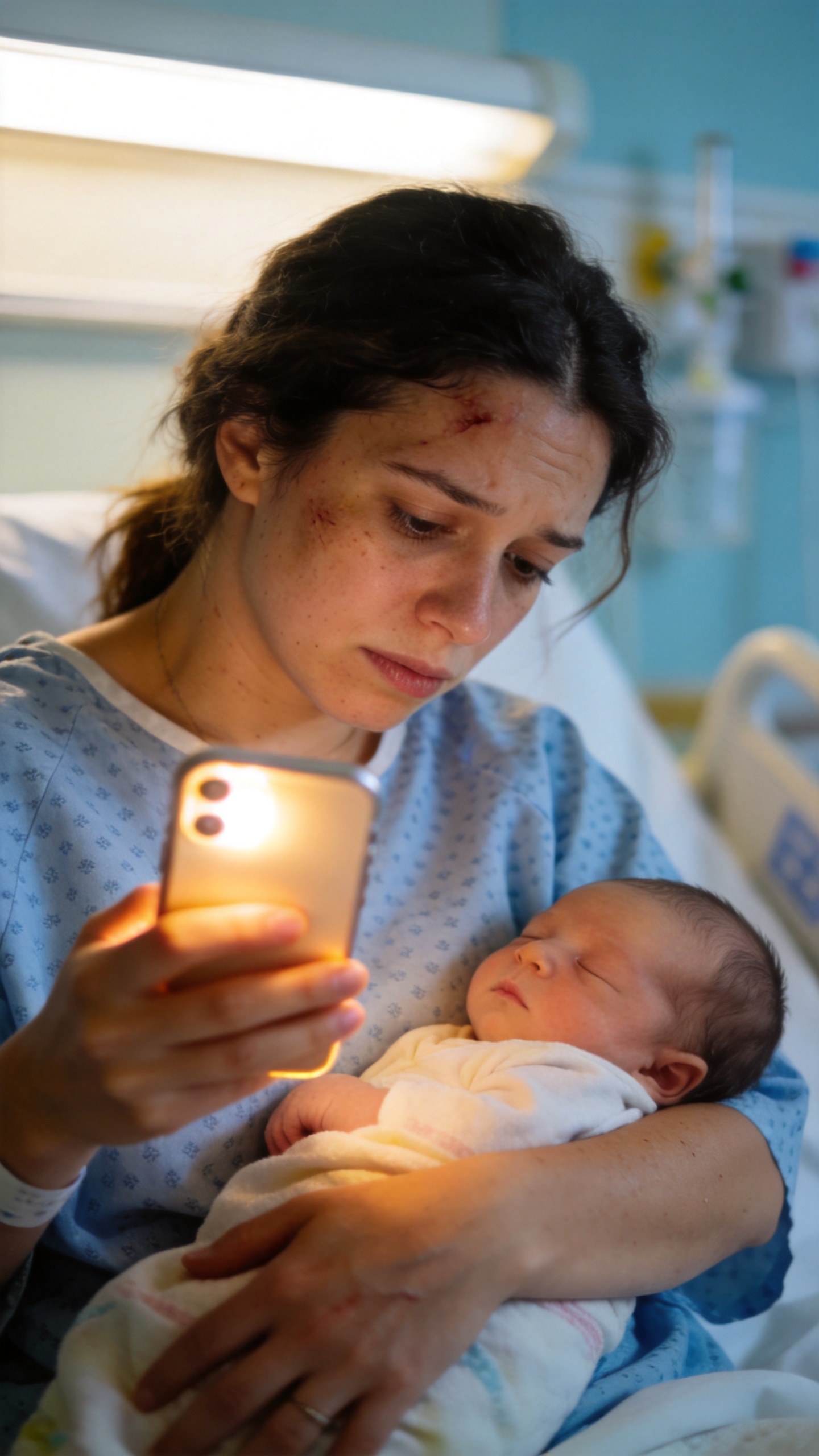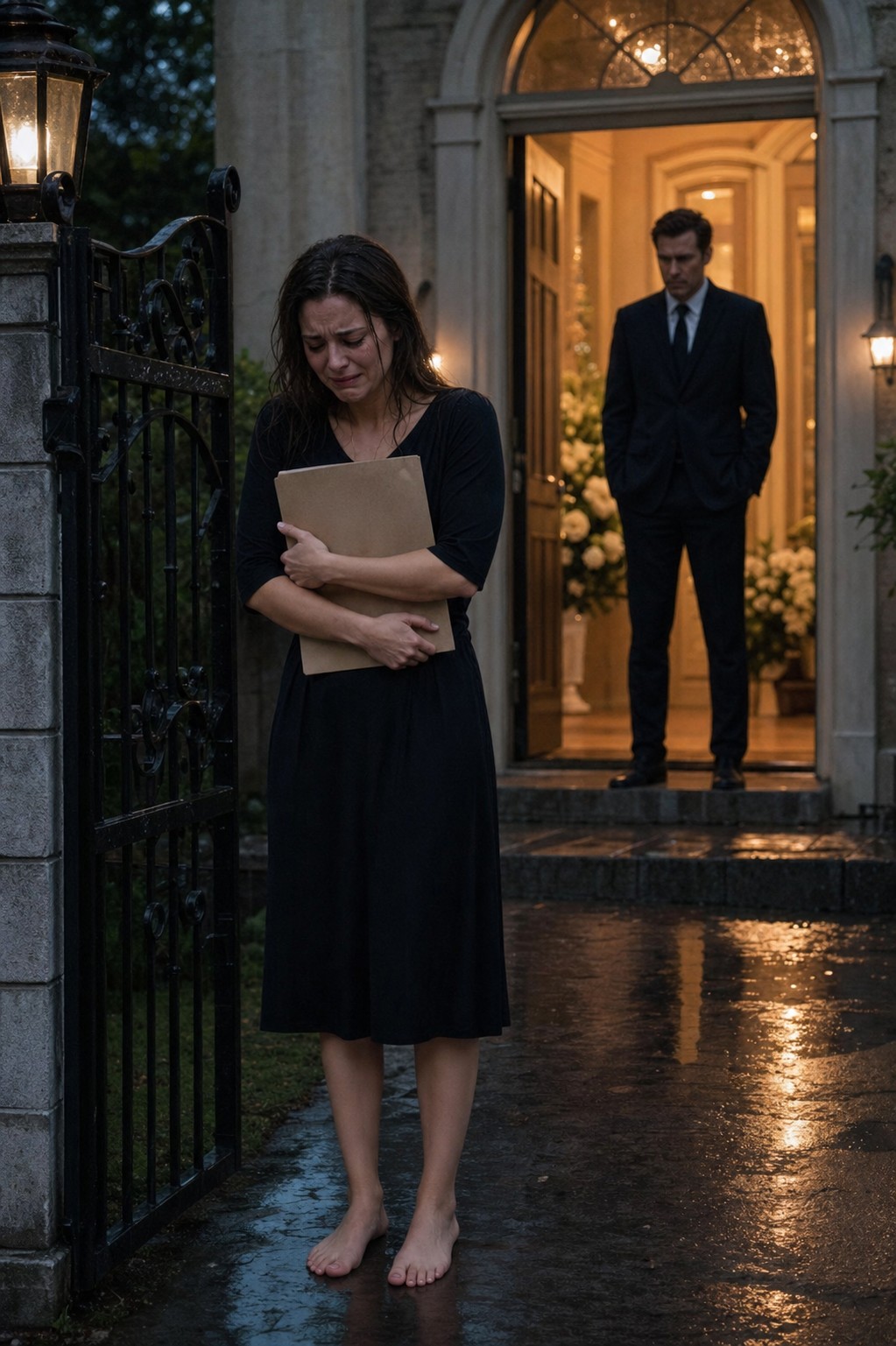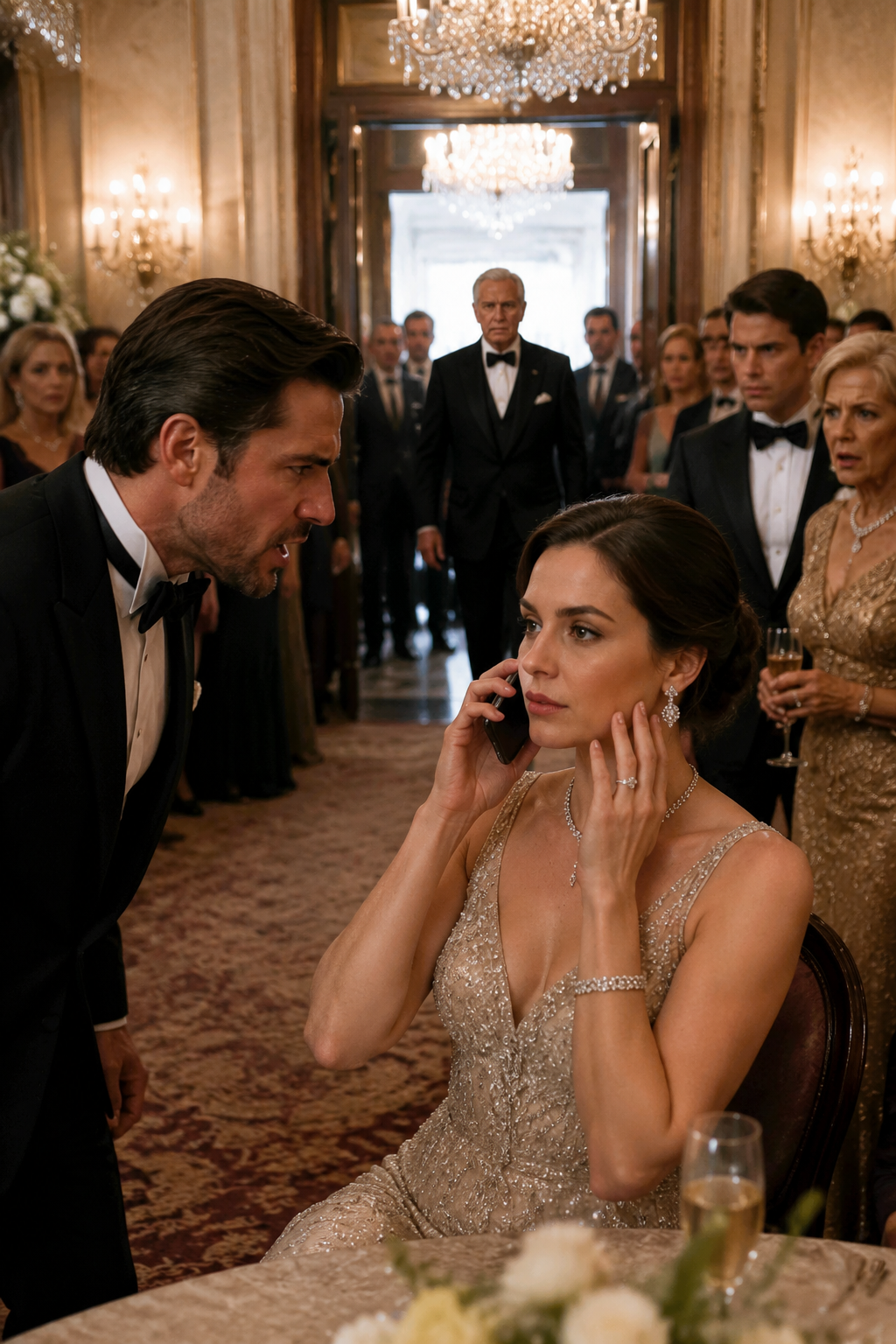
I Thought A DNA Test Would Finally Silence My Mother-In-Law's Accusations. Instead, It Proved The Child I Had Raised Was Not My Husband's, And Somehow He Was Not Mine Either
But beneath that composure was something harder.
Something final.
"Mother is correct about one thing," he said.
His voice was steady.
Controlled.
Firm.
"Carter does not share this family's blood."
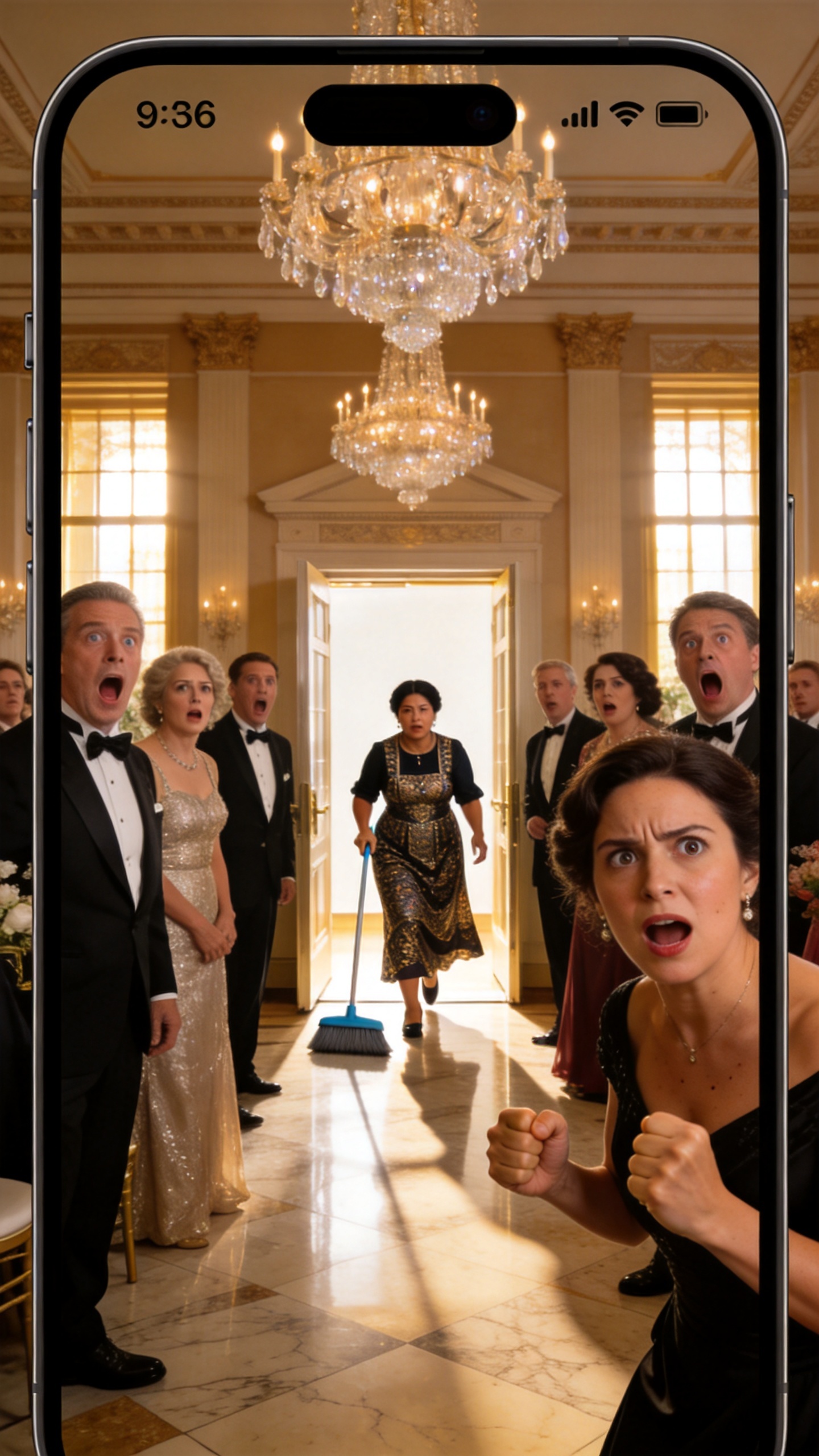
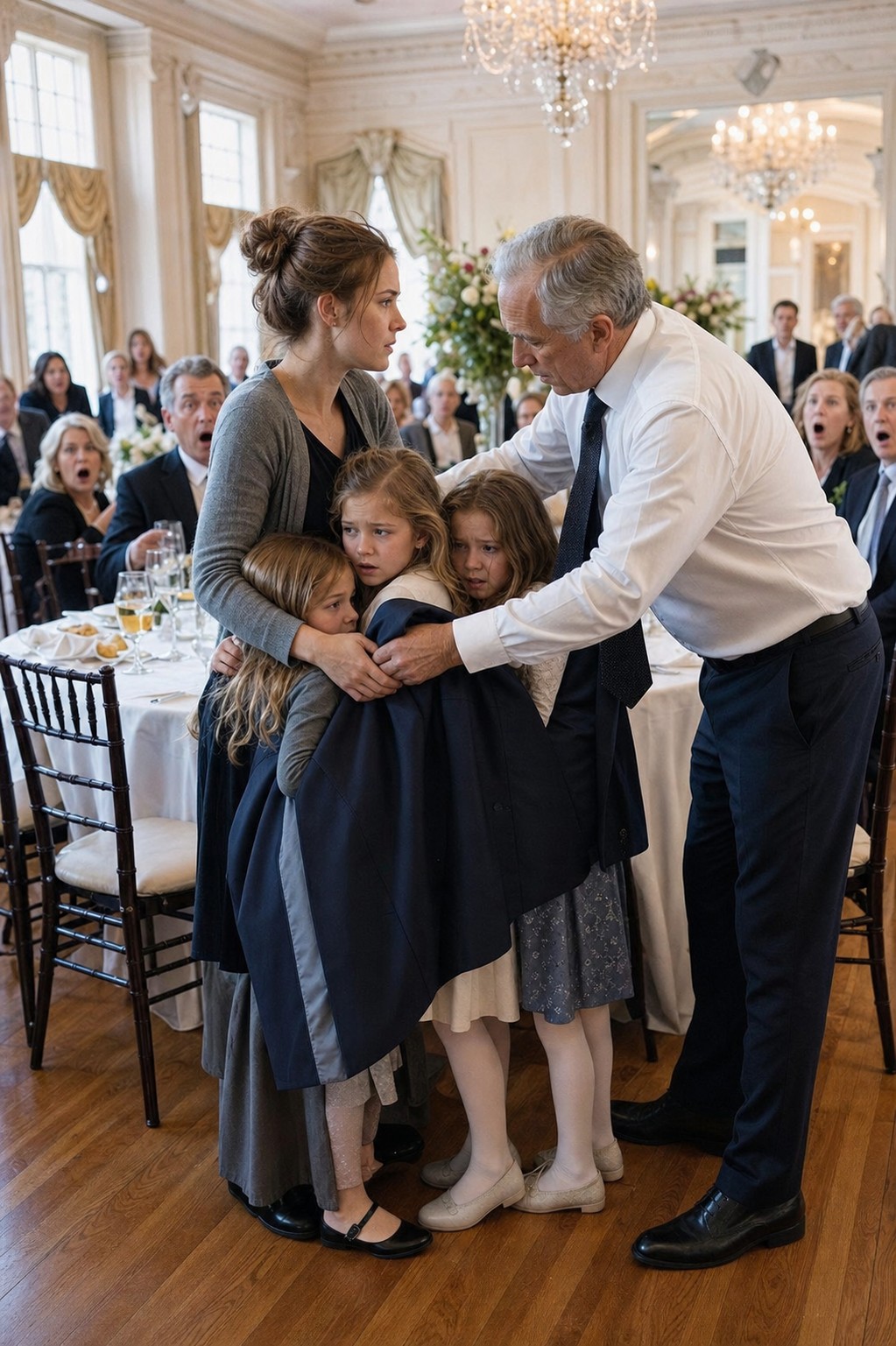
The words struck the gathering like a physical force.
"But there is far more to that truth than anyone here realizes."
Silence followed.
Perfect silence.
The kind that feels orchestrated.
Conversations stopped mid-sentence.
Laughter vanished.
Even movement seemed to slow as every eye turned toward him.
Every ounce of attention converged in one place.
Daniel crossed to a nearby display screen and connected the flash drive.
Within moments, documents began appearing.
Hospital records.
Financial transactions.
Internal communications.
Transfer confirmations.
Time stamps.
One piece after another.
Each document forming part of a larger story.
A story that became increasingly impossible to dismiss.
Increasingly impossible to explain away.
Biology Lost The Argument In Front Of Everyone
For the first time that evening, Margaret's composure cracked.
The change was subtle.
But unmistakable.
Her fingers tightened around the strand of pearls resting against her throat.
Recognition replaced dismissal.
Confidence gave way to alarm.
And suddenly she looked less like a woman in control and more like someone watching a locked door swing open.
"What have you done?" I demanded.
I stepped forward before I realized I was moving.
My voice cut through the stillness with a force I could no longer suppress.
The entire room seemed frozen.
Daniel met my eyes.
He never looked away.
"I didn't do this," he said quietly.
Then he turned toward Margaret.
"She did."
The explanation unfolded with devastating clarity.
There was no ambiguity.
No misunderstanding.
No alternate interpretation.
Shortly after my scheduled delivery at a private Manhattan hospital, a nurse had been bribed.
Fifty thousand dollars.
Transferred discreetly through a network of intermediaries designed to conceal its origin.
The objective had been simple.
Horrifyingly simple.
Switch my newborn child with another baby born on the same day.
Not because of a medical emergency.
Not because of a mistake.
Not because of confusion.
But because of appearance.
Because of optics.
Because Margaret wanted a child who better fit the image she believed her family should project to the world.
The selection had been deliberate.
Calculated.
Cold.
She had not acted out of panic.
She had not acted out of fear.
She had not acted in a moment of emotional instability.
Every step had been intentional.
Every decision had been planned.
Driven by the belief that lineage could be curated as effortlessly as a wardrobe.
That family could be redesigned like an accessory.
That reality itself could be altered if the appearance proved more convenient.
Part I: A Verdict Rendered Above Manhattan
April in Chicago has a way of disguising its severity beneath a veil of mist, as though the city itself prefers to soften its edges for those who cannot bear its sharper truths, yet the chill that settled inside the penthouse overlooking the Gold Coast that morning carried none of that mercy, because it did not come from the weather but from something far more deliberate, far more personal, and infinitely more cutting than rain.
My mother-in-law, Margaret Whitaker, sat perfectly composed in her high-backed chair near the window, a porcelain cup of Earl Grey balanced effortlessly between her fingers as though nothing in the world had ever unsettled her rhythm, and certainly nothing about the small child resting quietly in the bassinet beside me warranted even the slightest deviation from her routine.
She did not look at me when she spoke, which somehow made the words land even harder, as though they were not meant to be debated but simply recorded.
"That child does not belong to this family," she said in a tone so calm it bordered on clinical detachment, before taking another measured sip of her tea.
Her gaze drifted briefly toward the baby-only three months old at the time-yet there was no softness in her expression, no trace of curiosity or affection, only a kind of distant appraisal that reminded me uncomfortably of the way people inspect items they intend to return.
She had never liked the darker undertones in his hair, nor the warm shade of his skin, both of which stood in quiet contrast to the carefully curated aesthetic that defined the Whitaker lineage, a family that seemed to believe its legitimacy was reinforced by conformity to a specific image-blonde, blue-eyed, and unmistakably aligned with a certain old-money ideal that had less to do with heritage and more to do with presentation.
I was the one who insisted on the test, despite the resistance I encountered from my husband, Daniel Whitaker, who attempted to dismiss the matter with a gentleness that might have been reassuring under different circumstances but felt, in that moment, like avoidance.
"Nora, we don't need to prove anything to anyone," he told me, placing a hand over mine in what he likely believed was a comforting gesture. "I trust you, and that should be enough."
But trust, I had come to understand, is not always sufficient when doubt has been allowed to circulate unchecked, embedding itself in conversations whispered behind closed doors and glances exchanged across crowded rooms, especially in a world where reputation functions as currency and perception can shape reality more effectively than truth itself.
I wanted clarity, not reassurance; I wanted something tangible, documented, indisputable-a result printed in black ink on white paper that would silence Margaret's insinuations and dismantle the quiet arrogance that accompanied them.
When the results finally arrived at a discreet private clinic in Manhattan, I carried the envelope with a strange mixture of anticipation and certainty, already imagining the expression on Margaret's face when confronted with proof she could not refute, already rehearsing the composure I would maintain as I reclaimed control of a narrative that had never truly belonged to her.
Motherhood Became A Choice We Made Again
What I did not prepare for, because it existed entirely outside the realm of what I considered possible, was the single word printed on the report that would fracture everything I believed I understood about my own life.
Negative.
The child was not Daniel's.
And far more devastating than that revelation, the report confirmed something I could not immediately process, something that did not align with memory, logic, or biology.
The child was not mine either.
Part II: The Celebration That Unraveled Everything
Daniel's reaction was not what I expected, which perhaps should have been my first indication that there were layers to this situation I had yet to uncover, because instead of anger or confusion, he let out a laugh that carried a strange, hollow quality, as though it had been waiting for an opportunity to emerge.
In the days that followed, he urged me-quietly but persistently-to keep the results confidential, framing his request as a matter of protecting the family's reputation, the company's stability, and the intricate network of relationships that depended on both remaining intact.
I wanted to believe that his concern was justified, that there was a rational explanation waiting just beyond my reach, yet each night as I held the child-whom I had named Carter-I felt a growing dissonance between what I knew intellectually and what I experienced emotionally, because regardless of what the documents claimed, my attachment to him remained absolute, unshaken by technicalities that could not erase the months I had carried him or the nights I had spent learning the rhythm of his breathing.
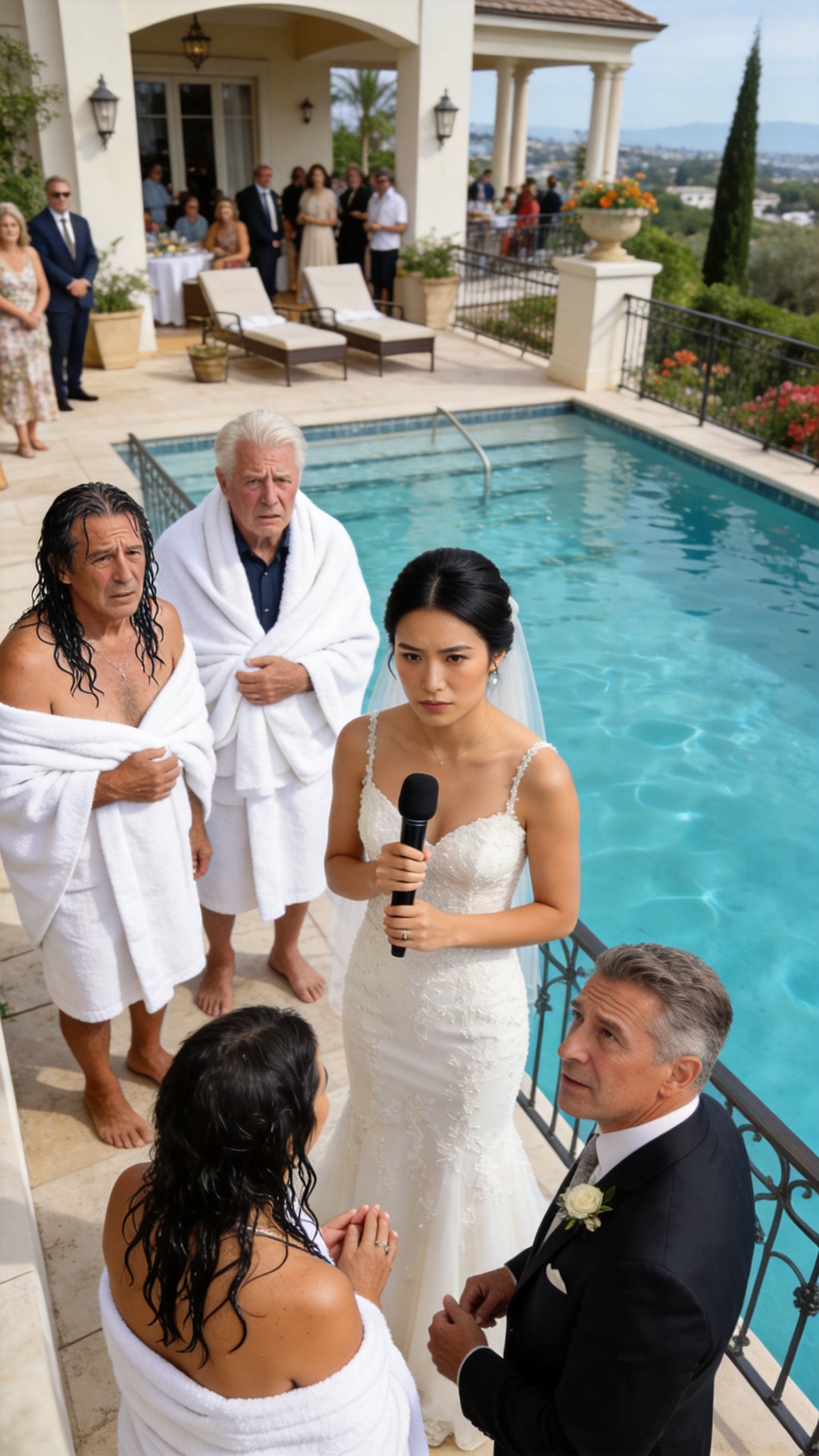
Six months later, under a sky so clear it seemed almost indifferent to the tension gathering beneath it, Margaret hosted an elaborate birthday celebration at the family's summer estate in Southampton, where manicured gardens and carefully arranged hydrangeas created the illusion of harmony that had long since dissolved within the family itself.
Guests moved through the space with practiced ease, their conversations light, their laughter measured, yet beneath the surface there was an undercurrent of expectation, as though everyone present sensed that something unresolved lingered just beyond the boundaries of polite interaction.
Margaret, of course, did not resist the opportunity to reintroduce the narrative she had been cultivating for months.
"Nora, my dear, this child remains a rather unfortunate inconsistency," she remarked, her voice carrying just enough volume to ensure that those nearby would hear without making it appear intentional. "One would expect certain… recognizable traits."
Before I could respond, Daniel stood, drawing attention in a way that immediately shifted the atmosphere, because there was a decisiveness in his posture that had been absent in previous conversations.
He held a small flash drive between his fingers, his expression composed yet resolute.
"Mother is correct about one thing," he said, his voice steady but firm. "Carter does not share this family's blood. But there is more to that truth than anyone here realizes."
The room fell silent with a precision that felt almost orchestrated, every movement slowing, every conversation dissolving as attention converged on him.
He connected the drive to a nearby screen, and within moments, documents appeared-records from the hospital, transaction logs, internal communications-each piece forming part of a narrative that became increasingly impossible to ignore.
Margaret's composure faltered for the first time, her fingers tightening around the string of pearls at her throat as recognition replaced dismissal.
"What have you done?" I demanded, stepping forward, my voice breaking through the stillness with a force I could no longer contain.
Daniel did not look away.
"I didn't do this," he replied quietly. "She did."
The explanation unfolded with a clarity that left no room for interpretation: shortly after my scheduled delivery at a private Manhattan hospital, a nurse had been bribed-fifty thousand dollars transferred discreetly through intermediaries-to switch my newborn with another child born on the same day, selected not for any medical reason but for appearance, for the illusion of compatibility with a family image Margaret deemed non-negotiable.
She had not acted out of panic or confusion, but out of calculated intention, driven by a belief that lineage could be curated as easily as a wardrobe.
Part III: Two Children, Two Lives, One Truth
The investigation that followed moved quickly, propelled by the weight of evidence that Daniel had quietly assembled over months, working in parallel with private legal counsel to ensure that when the truth surfaced, it would do so with enough force to prevent it from being suppressed.
Through hospital records and revised documentation, I found my biological son.
His name was Miles Rivera.
He did not live in a penthouse overlooking Manhattan or spend his days surrounded by curated perfection; instead, he lived in a modest apartment in Queens with his mother, Grace Rivera, a seamstress whose life revolved around long hours, careful budgeting, and a resilience that did not rely on appearances.
The first time I stood outside her apartment door, I felt a kind of fear that had nothing to do with confrontation and everything to do with uncertainty, because I did not know how to reconcile the life I had lived with the one I was about to encounter.
When Grace opened the door, her expression carried both caution and kindness, the kind of openness that does not come from privilege but from experience, and before either of us could fully articulate the weight of the moment, a small boy appeared behind her.
Miles.
There was no mistaking it.
The shape of his eyes, the line of his jaw-details that connected him to me in ways that no document could replicate.
My breath caught, not from shock alone but from the realization that everything I had lost and everything I had gained existed simultaneously within that single moment.
I looked down at Carter, sleeping peacefully in my arms, and then back at Miles, standing uncertainly beside the woman who had raised him, and understood with painful clarity that the decision ahead could not be reduced to biology.
Part IV: A Family Reimagined
Margaret Whitaker was charged with multiple offenses, including fraud and unlawful interference with medical procedures, and the ensuing media coverage transformed the family's carefully maintained reputation into a public spectacle, dissected and debated across platforms that had once celebrated its influence.
Yet amid the collapse of that external structure, a different kind of foundation began to form, one that did not rely on legacy or perception but on deliberate choice.
Grace and I met several times before making any decisions, choosing neutral spaces where neither of us felt displaced, allowing conversations to unfold gradually rather than forcing conclusions that neither of us was prepared to accept.
One afternoon, we sat together in a park in Brooklyn, watching the two boys-Miles and Carter-play on the grass, their laughter unburdened by the complexities that defined the adults around them.
"I can't take him away from you," I said finally, my voice unsteady despite my efforts to maintain composure. "You are the only mother he has ever known."
Grace reached for my hand, her grip firm yet reassuring.
"And I cannot ask you to give up the child you have protected from the moment he entered this world," she replied, her words carrying a quiet strength that resonated deeply.
What we decided that day defied conventional expectations, and perhaps even legal logic, yet it felt undeniably right in a way that no formal arrangement could replicate.
We chose not to exchange the children.
Instead, we chose to expand the definition of family.
Miles and Carter would grow up together, not as strangers separated by circumstance but as brothers connected by a shared story that we would navigate together, supported by two mothers who refused to reduce them to outcomes of a mistake they did not create.
Daniel, to his credit, stepped away from the influence that had shaped much of his earlier inaction, choosing to rebuild alongside me rather than retreat into the remnants of a structure that had already proven unsustainable.
Part V: Love Beyond Definition
Years later, when the boys turned five, we celebrated not in a grand estate or under the scrutiny of society's expectations, but in a public park where the simplicity of the setting allowed the focus to remain where it belonged.
There were no orchestras or curated guest lists, only laughter, shared meals, and the kind of joy that does not require validation.
When Miles ran toward me, calling out "Mommy Nora!" with an unfiltered certainty that left no room for doubt, and Carter followed moments later, reaching for Grace with equal affection as he called "Mommy Grace!", I felt something settle within me that had once seemed unattainable.
The DNA report that had once threatened to dismantle my life had, in the end, redefined it, stripping away illusions while revealing something far more enduring beneath them.
Motherhood, I realized, is not determined by ownership or genetic alignment, but by presence, by the choice to remain, to protect, and to love without condition, even when the path to that understanding is anything but straightforward.
And in that realization, I found not loss, but a completeness that no legacy, no reputation, and no expectation could ever replace.