A Barefoot Boy Pointed At My Daughter And Said, "She Can See You." Then My Wife Ran Across The Park Like He Had Just Exposed Her
A stroller wheel still squeaked.
Some teenager still laughed near the basketball court.
That made it worse.
My life was breaking open in the middle of an ordinary Tuesday, and the world kept moving like it had not heard the crack.
The Medicine Cabinet Had Been The Locked Door All Along
I did not confront Vanessa in the park.
That was the first smart thing I did.
I picked Emma up, thanked the boy, and carried my daughter to the car while Vanessa walked beside us talking too fast.
She said stress could create "visual confusion."
She said Emma had always chased sound.
She said children repeat nonsense.
She said the boy was probably neglected.
Every explanation sounded like a door closing.
I drove to the emergency room thirty minutes away. Not our usual hospital. Not the doctor Vanessa liked. I called my sister from the parking lot and told her to meet us there, because suddenly I no longer trusted myself to stand alone between my wife and my child.
Vanessa refused to come inside at first.
"You are humiliating me," she said.
I looked at Emma asleep against my chest and answered, "No. I am late."
The tests did not give us the whole answer that night.
Real life rarely gives the clean version fast.
But they gave us enough.
Emma's eyes were not destroyed.
Her response patterns were inconsistent with permanent blindness.
The medications in Vanessa's bag did not match the chart she had shown me.
One bottle had no current prescription attached to Emma at all.
The attending physician asked Vanessa where it came from.
Vanessa looked at me.
Then at my sister.
Then at the floor.
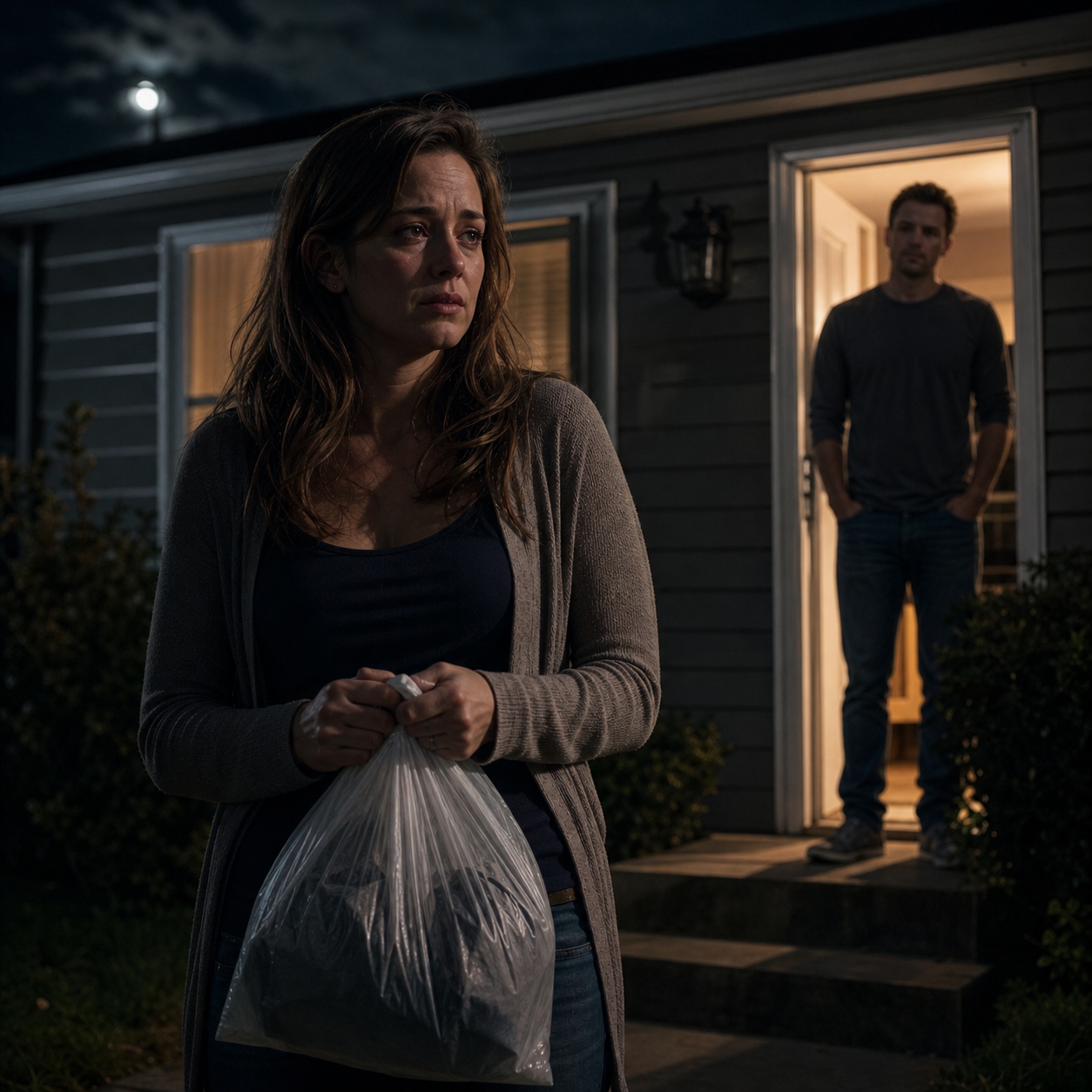
I watched the woman I had trusted with bath time, bedtime, fever nights, and school forms become a stranger one blink at a time.
My sister took Emma down the hall for juice.
Only then did Vanessa speak.
"You do not understand what it was like," she said.
I remember thinking those were the most frightening words she could have chosen.
Not I did not do this.
Not they are wrong.
Only you do not understand.
The Boy Was Gone Before I Could Thank Him
Child protective services became involved.
Then police.
Then specialists.
Then a lawyer who spoke gently to me because every sentence he gave me sounded like a verdict on my failure.
Vanessa had not made Emma blind in the simple way a headline would want.
It was messier.
Drops.
Sedation.
Dark glasses when they were not medically necessary.
Isolation from relatives.
Stories told to doctors that made symptoms look bigger, stranger, harder to challenge.
A mother who needed to be needed so badly that her child became a stage for it.
I learned that phrase later.
Medical abuse.
Fabricated illness.
Munchausen by proxy, some people still called it, though the terminology had changed.
The name mattered less than the child sleeping with every light on because she was afraid darkness meant medicine.
The barefoot boy was never easy to find. Park staff knew him only as Noah, a foster kid who drifted between supervised visits and the playground, sharp-eyed in the way children become when adults have failed them early.
Two weeks later, I saw him again near the swings.
He would not take money.
He would not take praise.
He only looked at Emma, who was wearing a sun hat instead of dark glasses, and asked, "Better?"
Emma nodded.
He nodded back like that was all he needed.
Vanessa's case dragged through court. Her family called me cruel. Some relatives said I must have missed signs because I worked too much. They were right about one thing. I had missed signs.
That truth will sit with me forever.
But guilt is not a home a child can live in.
So I built Emma a different one.
One with second opinions.
Open curtains.
No mystery medicine.
No one telling her to be quiet when she sees something she was never supposed to see.
Months later, Emma pointed out a red bird from the back porch.
Her voice was proud.
Careful.
Still learning to trust itself.
"Daddy," she said, "there."
I looked where she pointed.
Then I looked at her.
I did not cry until she went inside.
Because the first person to save my daughter was not a doctor.
It was a barefoot boy in a park who said one impossible sentence calmly enough that I finally listened.