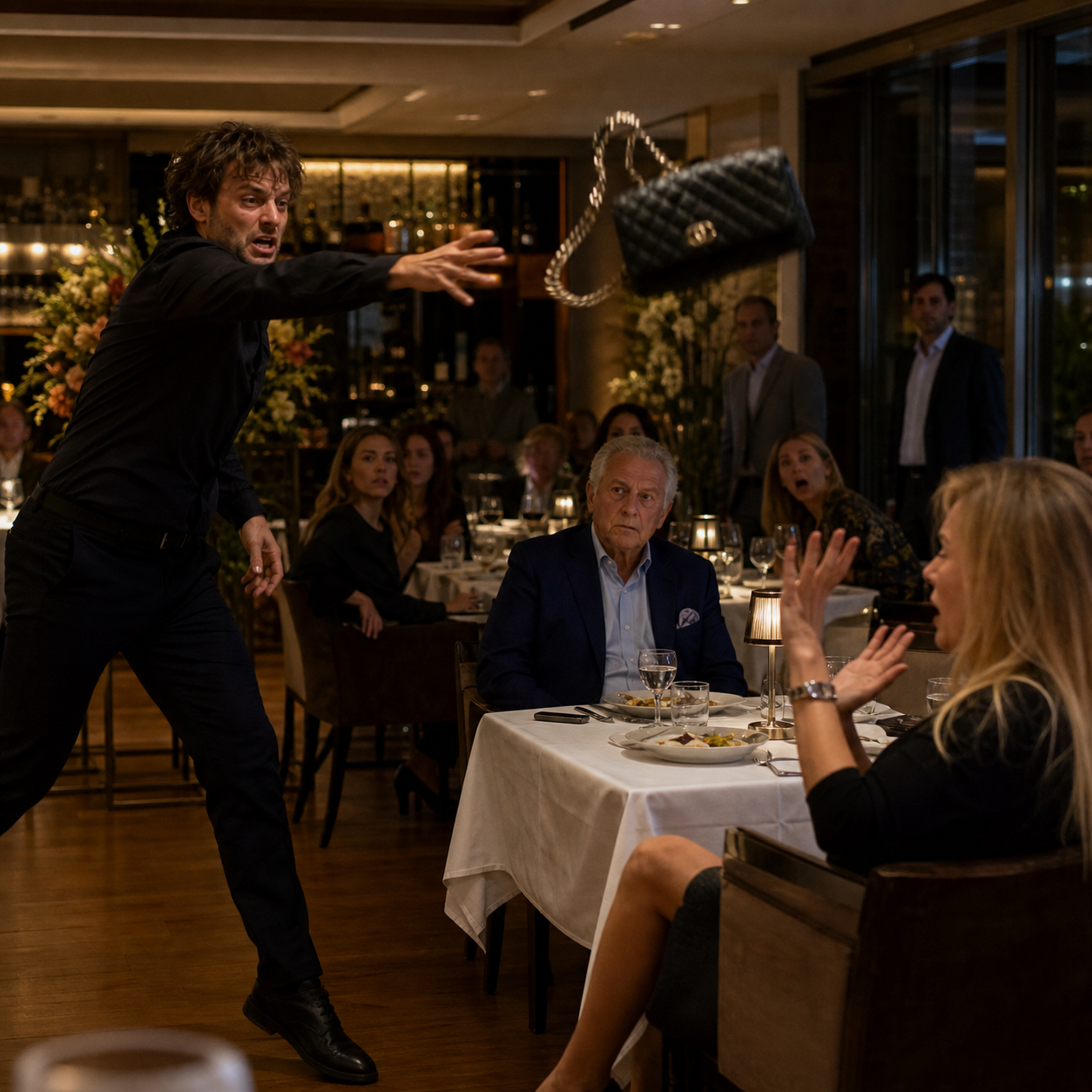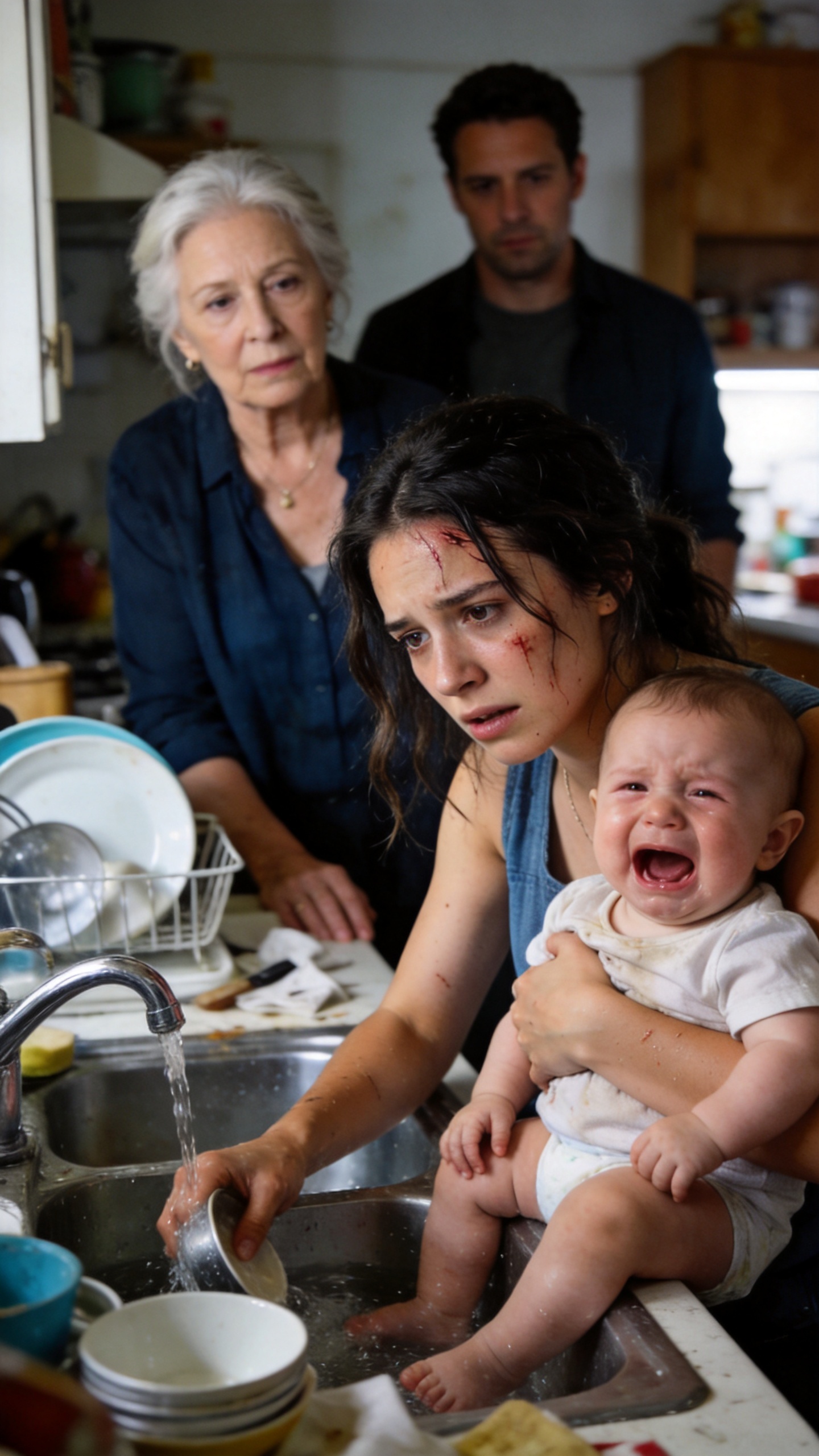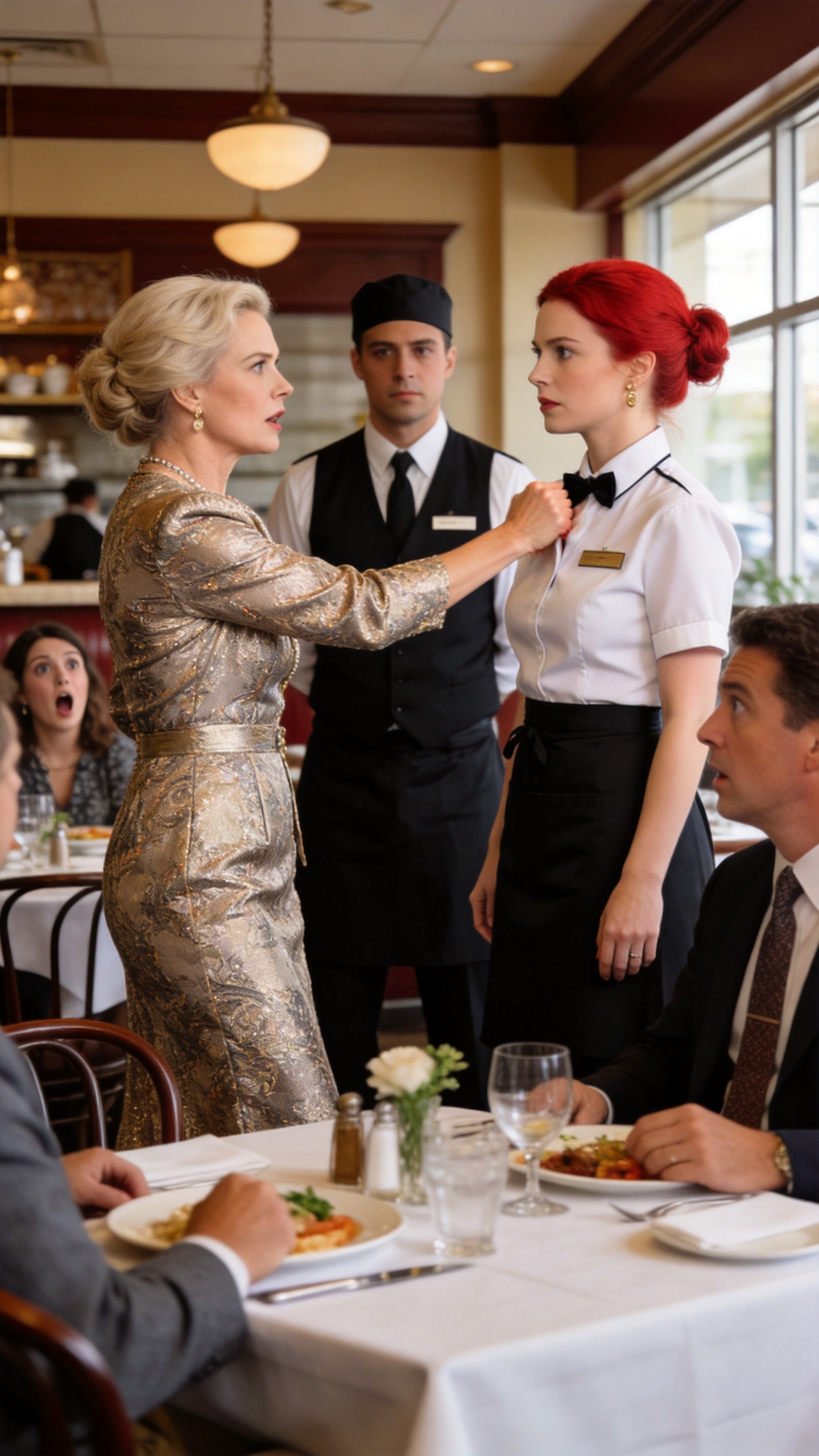
My Fiancee Said, 'Your Mother Can Scrub The Floor Before The Guests Arrive,' But When I Tore Up Our Wedding Contract, The House Revealed What Her Family Had Buried For Twenty-Eight Years
It makes them careful.
Jonah checked his screen first.
His face changed.
"Noah," he said.
He turned the phone toward me.
A video was playing.
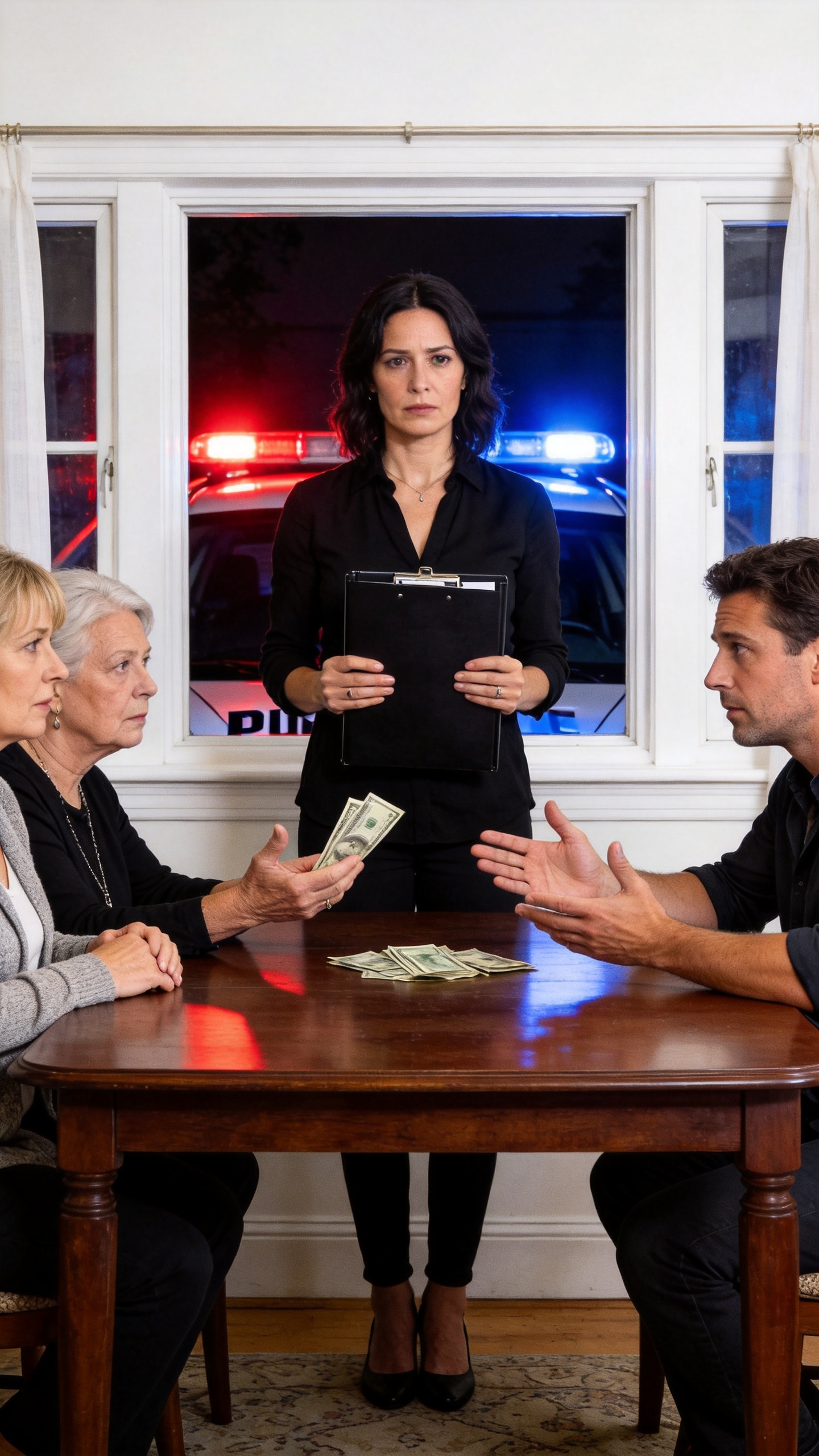
The angle came from the upstairs landing. Clear enough to see Camille standing over my mother. Clear enough to hear her order Margaret to scrub the floor. Clear enough to capture the sale-option clause, the title threat, the engagement scheme, the line about inconvenient people.
Across the top, someone had written:
REAL ESTATE HEIRESS CAUGHT HUMILIATING WAR HERO'S MOTHER IN LAND-GRAB SCHEME
It had been posted four minutes earlier.
It already had thousands of shares.
Camille's face lost all color.
"Who did that?"
A voice answered from the stairs.
"I did."
Everyone turned.
A young woman stood halfway down, soaked from the rain, a camera strap around her neck and a black notebook pressed to her chest. She was maybe twenty-six, with auburn curls and eyes that looked too tired for her age.
My mother whispered, "Nora."
Preston's mouth hardened.
"You," he said.
The young woman came down one step at a time.
"Nora Sloane," she said. "My grandmother was Celia Sloane. The reporter Dean Whitaker tried to contact before he disappeared."
A new silence took the room.
Not polite.
Not stunned.
Afraid.
Nora looked at Preston. "My grandmother died in a hit-and-run three days after your company filed emergency claims on six properties whose owners refused to sell. I have spent eight years proving that was not an accident."
Preston gave a dry laugh. "This is absurd."
Nora opened the black notebook.
"Oak Street. Harrow Lane. Mason Court. Three widows, one disabled veteran, one family with a child in medical debt, and a retired school principal who refused to leave the house her husband built."
She turned a page.
"Every one of them signed emergency repair agreements. Every one of them was told the papers were temporary. Every one of them lost title within eighteen months."
Preston's smile did not move, but the skin around his eyes tightened.
"You have no standing here," he said.
Nora looked up. "My grandmother had standing. Your men made sure she never reached court."
The room shifted again.
People who had come for champagne were suddenly looking for exits.
Because this was no longer gossip.
This was history walking back into the house with rain in its hair.
"So is making an old woman scrub a floor while you steal her house," Nora said. "But here we are."
She turned toward me then, and for the first time I saw pity in her face.
Not the cheap kind.
The kind that hates itself for arriving late.
"Your father sent my grandmother copies," she said. "Not originals. Copies. Enough to show the pattern, not enough to survive in court after he disappeared. She kept trying anyway."
My throat closed.
"Did she know where he went?"
Nora's expression changed.
That tiny hesitation told me the answer would not be kind.
"She believed he was alive for at least three days after everyone said he was gone."
My mother made a sound behind me.
I turned.
Margaret was gripping the banister with both hands.
She looked less like a woman hearing new information than a woman hearing a locked door open from the other side.
My mother reached for the railing.
I looked at her. "You knew her?"
Tears slid down her face. "I found one of your father's letters after you deployed. I called Celia's family. Nora came today because I was finally ready to show her what I had."
"You were investigating him?"
My mother nodded.
For one painful second, hope and hurt collided so hard inside me I could barely stand.
She had been frightened.
She had been ashamed.
But she had not been doing nothing.
Sirens rose outside.
Preston turned toward the door.
Jonah blocked him.
"Bad time for a walk," Jonah said.
The front door thundered under a fist.
"Federal agents!"
Guests scattered from Preston as if his money had become contagious.
Three agents entered, rain shining on their jackets. The woman in front had steel-gray hair pulled back and eyes that missed nothing.
She did not look impressed by the chandelier.
She did not look impressed by Preston.
She looked at the bucket first.
Then my mother's hands.
Then the torn contract.
Only then did she look at me.
It was the first official face I had seen all night that seemed to understand exactly where the violence had happened, even though no one had thrown a punch.
"Preston Waverly," she said, showing identification. "You need to come with us."
Camille laughed once, high and sharp. "Do you know who he is?"
The agent looked at her. "Yes. That's why we brought a warrant."
Preston adjusted his cuffs.
Men like him rarely looked afraid when cameras were present.
They looked offended.
"On what charge?" he asked.
"Witness intimidation, fraud conspiracy, elder financial exploitation, and obstruction," the agent said. "More may follow."
Camille stepped back.
The agent turned to her.
"Camille Waverly, you will come with us as well."
Her mouth opened.
Closed.
Opened again.
"For what?"
The agent's eyes moved to the torn contract at my feet. "You explained that better than I could."
For the first time since I had known her, Camille looked young.
Not innocent.
Just young enough to realize her father could not buy the room back.
"Noah," she said. "Please."
I looked at my mother.
At her swollen hands.
At the bucket.
At the home my father had tried to save and my mother had nearly lost twice.
"No," I said.
The agents took Camille by the arm.
She tried to recover herself as they moved.
Of course she did.
Camille had been raised in rooms where panic was considered vulgar. Her chin lifted. Her shoulders went back. She looked toward the guests as if expecting someone to remember loyalty, or money, or fear.
No one stepped forward.
That hurt her more than the hand on her arm.
I saw it.
The exact second she understood that influence had a temperature, and hers had gone cold.
As they led her toward the rain, she twisted back with one last smile.
Small.
Ugly.
Victorious in a way I did not understand.
"Ask your mother," she called. "Ask her what happened after Dean came back."
The door closed behind her.
And all the relief drained out of the house.
My Mother Had Not Told Me The Worst Part
I turned slowly.
My mother had gone white.
Nora lowered her camera.
The federal agent, who introduced herself as Agent Maren Holt, did not move toward the door. She watched my mother the way soldiers watch a road that may still be mined.
"Margaret," Agent Holt said, "did Dean Whitaker return after the night he disappeared?"
My mother pressed both hands to her mouth.
No answer.
That was answer enough.
"Mom," I said.
Her knees buckled.
I caught her before she fell.
For a second she clung to me like the mother I knew, the mother who had held my face through fevers and waved at buses and written letters to every base I had ever called home.
Then she whispered, "He came back three nights later."
The words opened a hole beneath my childhood.
"You told me he never came home."
"He shouldn't have," she sobbed. "He was bleeding. He said Preston's men thought he was dead. He said we had to run before morning."
Agent Holt stepped closer. "Where did he go after that?"
My mother looked at the stairs.
"I was scared," she said. "There were men outside. Noah was asleep. Dean wanted to take him and leave, but I thought if we ran, Preston would kill all of us."
"So you chose for him," I said.
The words came out flat.
My mother's face collapsed.
"I chose badly," she whispered.
"You chose them."
"I chose a living son over a dead family."
I wanted that to be simple.
I wanted her to be only guilty, only weak, only the woman who had given my father back to the wolves because fear had sounded safer than love.
But grief is cruel because it makes room for more than one truth.
She had betrayed him.
She had saved me.
And she had spent the next twenty-eight years letting me hate a ghost because the truth would have made me hate her.
I already knew what was coming.
Some part of me knew before she said it.
Still, hearing it split me open.
"I called Preston," she whispered.
Nora inhaled like she had been struck.
I let go of my mother and stepped back.
That movement broke her more than any shout could have.
She had prepared for anger.
She had prepared for accusation.
She had not prepared for space.
The six inches between us became the whole history of my life: birthdays with an empty chair, Father's Day crafts hidden in drawers, my mother crying in the laundry room when she thought the washing machine covered the sound.
All of it stood there with us.
Her hand reached for me.
I could not take it.
"I thought I was saving you," she said. "Preston promised he would spare you if I told him where Dean was. I was weak. I was so afraid."
"What happened to him?"
"They took him."
"Where?"
"I don't know. But before they came in, he put something in my apron pocket. I didn't find it until morning."
Agent Holt's voice sharpened. "What did he leave?"
My mother looked toward the ceiling.
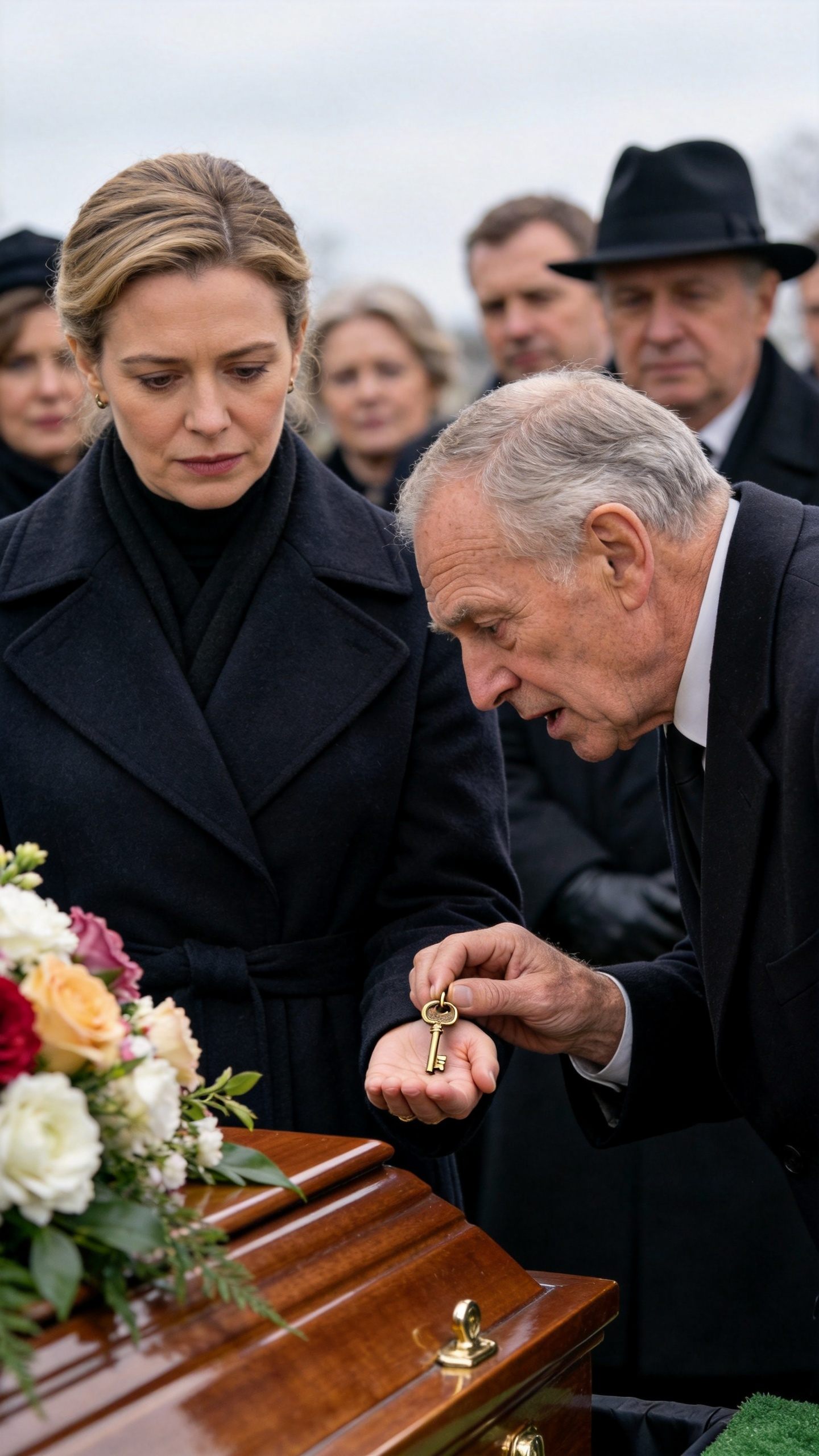
"A key," she said. "And a note. It said, behind the old water tank, when the house is no longer safe."
I was moving before she finished.
Up the stairs.
Past the landing where Nora had filmed the ruin of my wedding.
Past the bedroom where my mother said my father had kissed my forehead before vanishing.
The attic door groaned open above me.
Dust breathed out.
Jonah followed. Nora followed. Agent Holt followed with one hand near her radio.
Behind the old water tank, wrapped in oilcloth and tied with wire, was a narrow metal box.
My hands shook when I opened it.
Inside were photographs, deed copies, cassette tapes, a leather notebook, and a sealed envelope with my name written in ink so faded it looked like a ghost.
NOAH.
There were other names too.
Some I had heard in passing from my mother.
Some Nora had just read from her notebook.
Some were crossed out in my father's hand, then rewritten beside parcel numbers, dates, initials, and payment records.
This was not a box of memories.
It was a map of a machine.
Every family pressured.
Every deed altered.
Every accident that happened at exactly the right time for Preston Waverly.
At the bottom was a photograph of my father holding me on the front porch.
I was maybe four.
He was laughing at something beyond the frame, one arm around me, the other hand raised as if telling whoever held the camera to wait.
My mother had cut him out of every family album after he disappeared.
Or so I had thought.
Seeing his face whole, not blurred by memory, nearly knocked the breath out of me.
He had my mouth.
Or I had his.
I did not know which thought hurt more.
I opened it.
The first line was my father's handwriting.
My son, if you are reading this, then the house kept the truth longer than I could.
My vision blurred.
I kept reading.
Trust evidence over grief. Trust patterns over promises. And never trust the person who tells you betrayal happened only once.
The attic went cold.
Slowly, I turned toward the stairs.
My mother stood in the opening.
Her tears had stopped.
For the first time in my life, I saw something in her eyes that did not belong to fear.
Calculation.
Old.
Quiet.
Patient.
"Mom?" I said.
She looked at the box.
Then at me.
"You were never supposed to find all of it," she whispered.
Nora lifted her camera again, but her hand was trembling.
Agent Holt drew herself very still.
From downstairs came the crash of breaking glass.
The house lights flickered once.
Then went out.
Jonah grabbed my shoulder in the dark.
And in the blackness, my mother whispered toward the hallway below:
"Dean, please. He knows now."