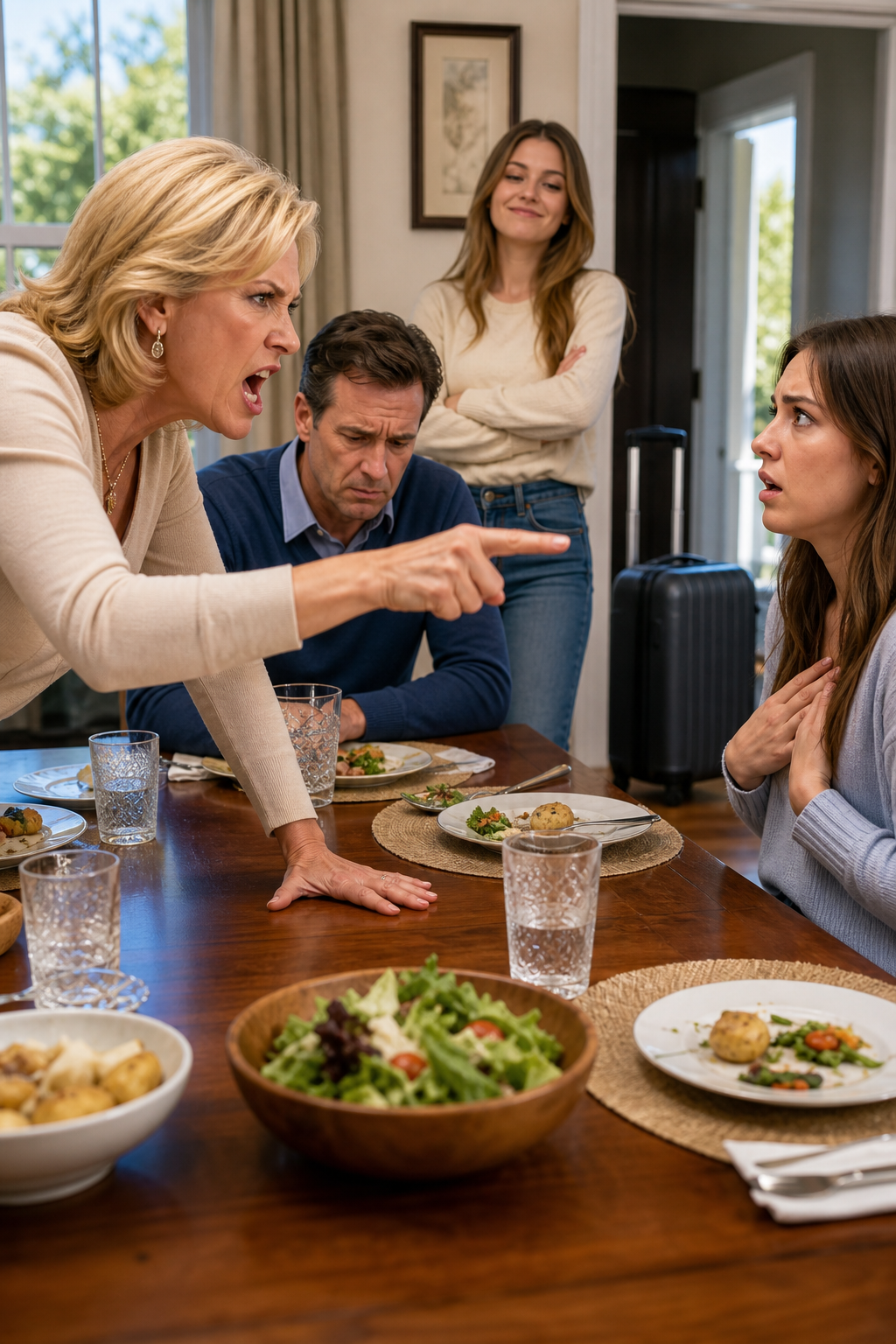
At The Airport, My Father Left My Grandmother With Her Old Suitcase After Taking 520,000 Pesos From Her And Said, "She's Not Coming With Us Anymore." I Tore Up My Ticket Without Screaming
Then irritation.
Then the voice he used at family dinners when he wanted everyone to remember he paid for the table.
But he had not paid for that trip.
Grandma had.
And Grandma, it turned out, had brought more than receipts.
In the inner pocket of her purse were copies of bank withdrawals, text messages, and a letter from a legal clinic she had visited three weeks earlier because she was afraid my father was trying to sell her house.
I read the letter twice before the words made sense.
Power of attorney.
Proposed care facility.
Urgent property transfer concern.
My father had not only taken travel money.
He had been preparing to move my grandmother out of her own home.
The Spain trip was supposed to get her documents away from her, separate her from neighbors, and make her look confused in public when she objected.
He had called it a vacation.
It was a rehearsal.
Grandma Had Already Made One Call He Did Not Know About
Two officers escorted us to a quieter room near customer service.
My aunt cried into a napkin.
Tessa kept saying she had not known the whole thing.
My father paced and told everyone he was the only responsible adult in a family of emotional women.
Grandma sat beside me with her hands folded on top of her purse.
She looked smaller than she had that morning.
But not broken.
"I was afraid," she whispered.
"Of Dad?"
She nodded.
"He kept saying I forgot things. He told the bank I was getting confused. He told Paula I needed watching. But I remembered every dollar."
I took her hand.
"Why didn't you tell me?"
Her eyes filled.
"Because you love your father."
That sentence hurt more than anything he had said.
A woman in a gray suit arrived forty minutes later. Her name was Ms. Navarro, and she was not airport staff.
She was an attorney from the elder advocacy clinic.
Grandma had called her from the bathroom before we left for the airport.
"I thought maybe he would change his mind," Grandma said.
Ms. Navarro looked at my father.
"He did not."
Within a week, an emergency petition froze the attempted house sale.
Within two weeks, the court suspended my father's power of attorney pending review.
Within a month, the judge revoked it entirely.
The bank flagged the transfers.
My father had to repay what he could.
He sold his truck first.
Then the boat he claimed was an investment.
Paula returned the jewelry Grandma had given her "for safekeeping."
Tessa apologized in a letter that Grandma read once and placed in a drawer without answering.
My father blamed me for all of it.
Then he blamed Ms. Navarro.
Then the bank.
Then Grandma's neighbors.
He never blamed the man in the airport who had looked at his mother and decided she was baggage.
Madrid Waited Until She Was Ready
Six months later, I took Grandma Ruth back to LAX.
Same terminal.
Different morning.
Her suitcase had been repaired. The stubborn wheel rolled straight now, and I had tied a new red ribbon around the handle.
She wore the navy coat again.
This time, no one told her she was trouble.
This time, no one held her documents but her.
At check-in, the agent asked for her passport.
Grandma handed it over with a little lift of her chin.
"Madrid?" the agent said.
Grandma smiled.
"Finally."
I had bought two tickets with money from my own savings and the first repayment my father made under court order.
Grandma tried to object.
I told her it was not charity.
"It's evidence," I said.
"Of what?"
"That promises can be repaired by better people than the ones who broke them."
She patted my hand.
"Your grandfather would have liked that."
At the gate, she stood by the window and watched planes move across the runway.
For a while, neither of us spoke.
Then she said, "I kept thinking that day would be the most humiliating day of my life."
"Was it?"
She shook her head.
"No. It was the day I found out I still had a witness."
Boarding began.
I offered her my arm.
She took it, but only lightly.
Grandma Ruth did not need carrying.
She had never needed carrying.
She had needed people to stop stealing the ground from under her feet and calling it help.
As we walked down the jet bridge, she looked back once at the terminal.
Not with fear.
Not with bitterness.
With the calm face of a woman leaving on her own ticket.
And this time, when the plane lifted toward Madrid, my grandmother was not abandoned at the airport.
She was in the window seat, holding her passport in one hand and my grandfather's old photograph in the other, smiling like the sky had finally remembered her name.